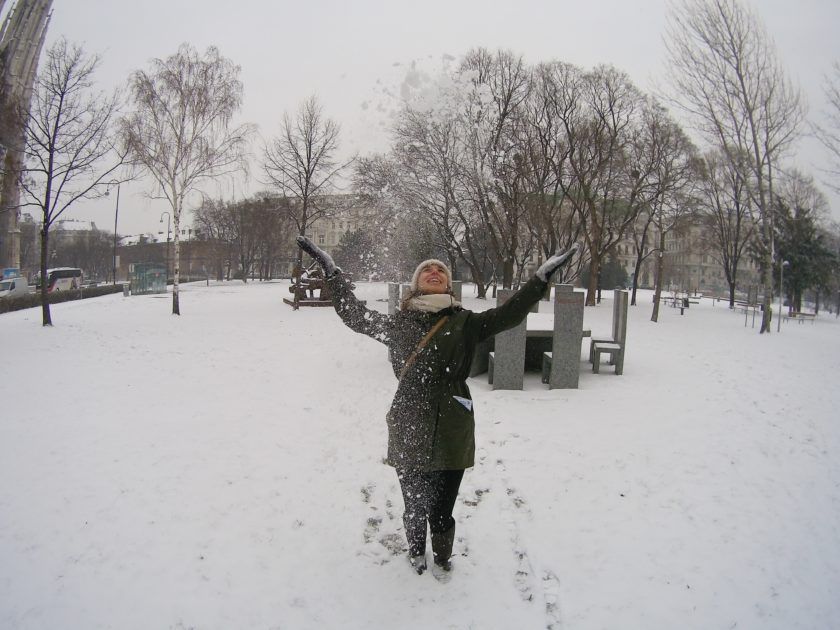
The City of Pastry-Cream Houses: Vienna was the second city of our 2016 winter trip. Because we were short on time, we set aside just 24 hours for Vienna. 😇 But we were enchanted. There are very, very beautiful places; come on, in this post let's get to know Vienna, the capital of Austria, and then look at what we picked as places to visit!
WHAT YOU SHOULD KNOW ABOUT VIENNA
The city, where the Habsburg Dynasty was based for centuries, became one of Europe's political and cultural centres. While the city, with its population of 2 million, was the fourth-largest city after New York, Paris and London, sadly a quarter of the population was lost after the First World War.The Ottoman Period
As you'll remember from high school history lessons, the Ottomans besieged Vienna twice. The first was in 1529 by Suleiman the Magnificent, and the second in 1683 by Merzifonlu Kara Mustafa Pasha. In both sieges, unfortunately, the Ottoman Empire didn't get the results it wanted. In fact, the retreat of the Ottoman Empire, which took quite a bad blow after the second siege, was accepted in Vienna as "we defeated the Ottomans", and to not forget this victory, sadly, a statue showing an Ottoman soldier being trampled underfoot was made at St. Stephen's Cathedral in the Innere Stadt area.19th Century
Austria, part of the Holy Roman Empire, gained its independence in 1848 with a new young emperor born at Schönbrunn Palace. When 18-year-old Franz Joseph came to the throne, he turned the government programme back to an absolutist structure. A structure far from a constitutional parliamentary regime continued until 1866.I'd like to round off the Vienna of that period with a fact from rail systems, my area of interest:) Europe's first horse-drawn tram began running in Vienna between Schottentor and Hernals.
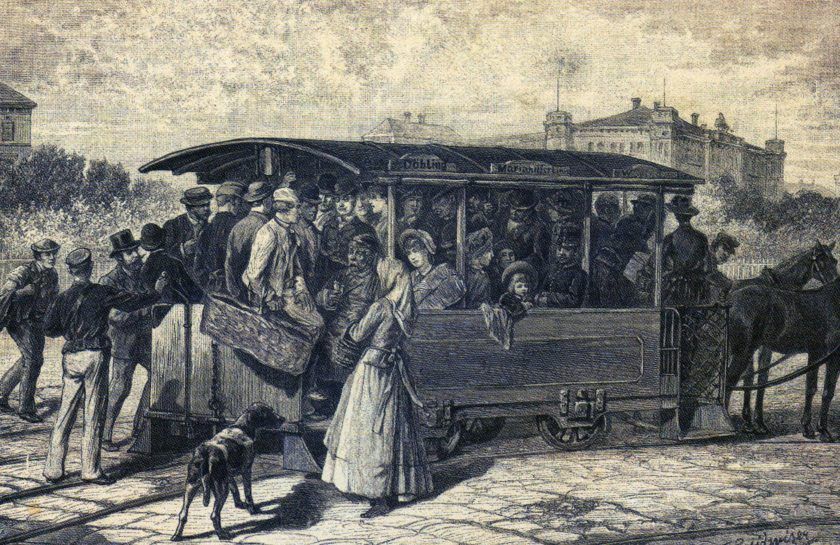
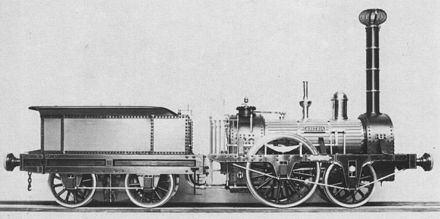
In the city, which developed very quickly from the middle of the 19th century, steam trams came into use by 1883.
20th Century
The consequences of the bullets fired in Sarajevo, which caused the First World War starting in 1914, turned out worse than expected. The eager war passion and excitement at the start turned over time into worry and unease among the people. Since the losing side of the war was the German Empire and Austria-Hungary, both states had to comply with the new decisions and practices in Europe.The Second World War began with the attack on Poland in 1939, and it also led to the deaths of 200 thousand Viennese. At a ceremony held on 27 April 1945, the Second Austrian Republic was proclaimed, and so a temporary municipal administration was set up for Vienna too. The city was shared out among the states known as the Allies, the USA, Russia, Britain and France, and divided into 4 zones; with the 'Austrian State Treaty' signed at Belvedere Palace in 1955, Austria became a free country. In October of the same year, the last occupying forces left Austria. After this, Austria as a country announced that it would follow the principle of 'permanent neutrality'.
PLACES TO VISIT IN VIENNA
Vienna, the capital of Austria, is one of the most popular tourist cities in Europe, even in the world. The city has nature, history, culture, art, almost everything. From historic cathedrals to magnificent palaces, it takes you on a journey into the past. Berna loved hearing that the term pastry-cream houses is used for this place 🤩Places to Visit : I'm leaving the link here👆. Click!👆
WHERE IS VIENNA?
Vienna is in Central Europe, in the northeast of Austria. It lies at the easternmost edge of the Alps, within the Vienna basin. The Danube, which passes through Budapest, also divides the city of Vienna in two.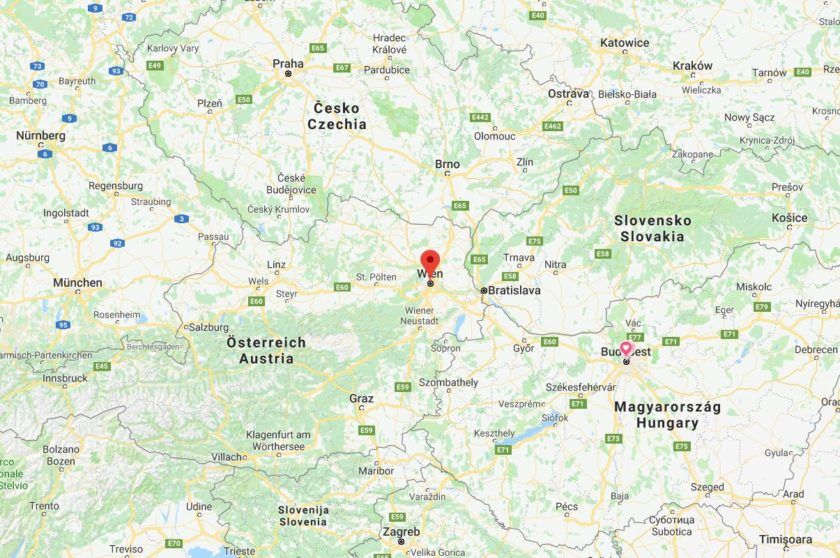
WHEN TO GO TO VIENNA?
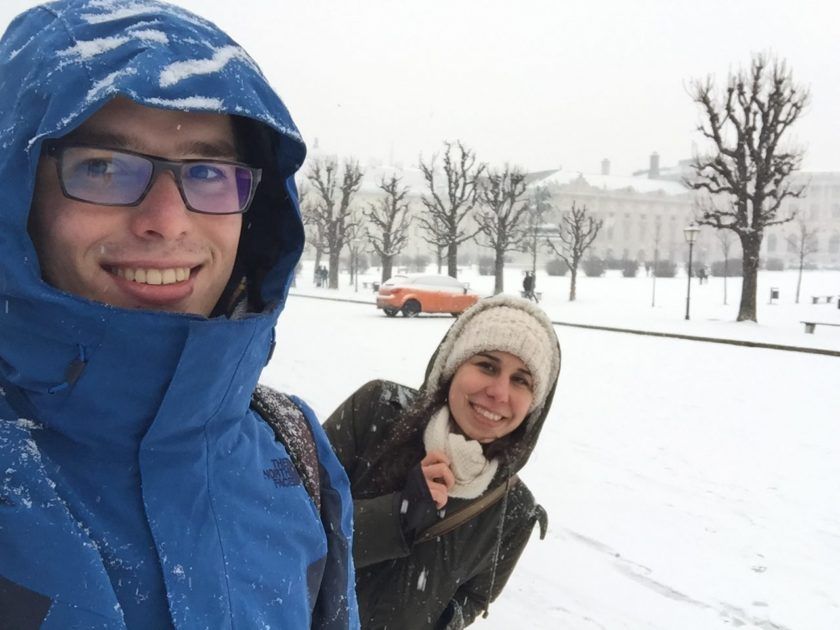
In Vienna, which has a typical continental climate, high temperatures meet you in the summer months, while winters bring cold and snowy weather. Indeed, in January we woke up to a very snowy Vienna morning. By the way, another nice thing about going in winter is that you can watch hundreds of Viennese ice skating, and even skate yourself on the city's rinks.Those exploring the city in winter like us should be careful to dress in thin layers. Even if the weather conditions seem to make your trip harder, if you have the necessary clothes and gear you can enjoy exploring in winter.
Note: I can say it's almost impossible to get around in January-February without thermals. Gloves/a beanie are a must too!
HOW TO GET TO VIENNA?
Vienna International Airport, 18 kilometres from Vienna city centre, puts visitors' comfort first with its large car park and various passenger services. It also offers unlimited Wi-Fi. With USB charging points and sockets, it makes using mobile technology easy too.There are flights to Vienna Airport from Istanbul, Ankara, İzmir and Antalya. You can also reach Vienna by bus or train from nearby European cities like Salzburg, Prague and Budapest.
Since we didn't go directly from Istanbul, we moved from Budapest to Vienna by bus. The bus covers this 250 km distance in 3 hours. We chose FlixBus, and we'd bought the tickets for 10€ per person. You can reach the Europe FlixBus route map here.
If you like, you can also go by train. The train journey takes 2 hours 40 minutes. We didn't want to pay 10€ more per person for 20 minutes. Besides, buses in Europe now have train-level comfort :)
WHERE TO STAY IN VIENNA?
Since you can reach almost everywhere in Vienna by public transport, your hotel doesn't need to be in the city centre. Of course, if you say you're curious about Vienna's nightlife too, I'd recommend staying somewhere close to the centre. Although public transport in Vienna is well developed, services end after a certain time at night.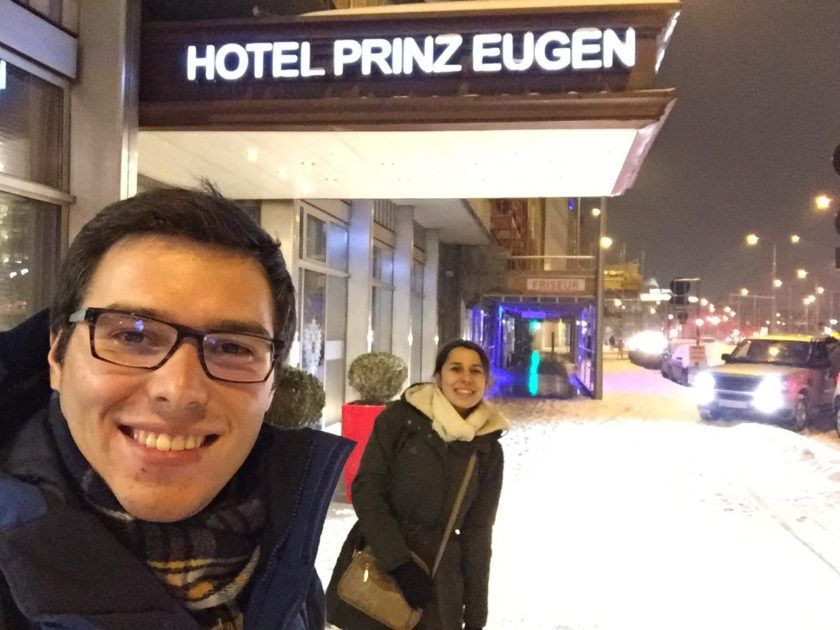
Since I didn't have much time to research hotels, I made a choice close to the city centre at an average price. Naturally, we didn't want to choose a very expensive place. Novum Hotel Prinz Eugen, Seeing that it had high ratings on Booking and Trip Advisor and that its breakfast was also well liked, we booked for two people. We paid 44€ a night.
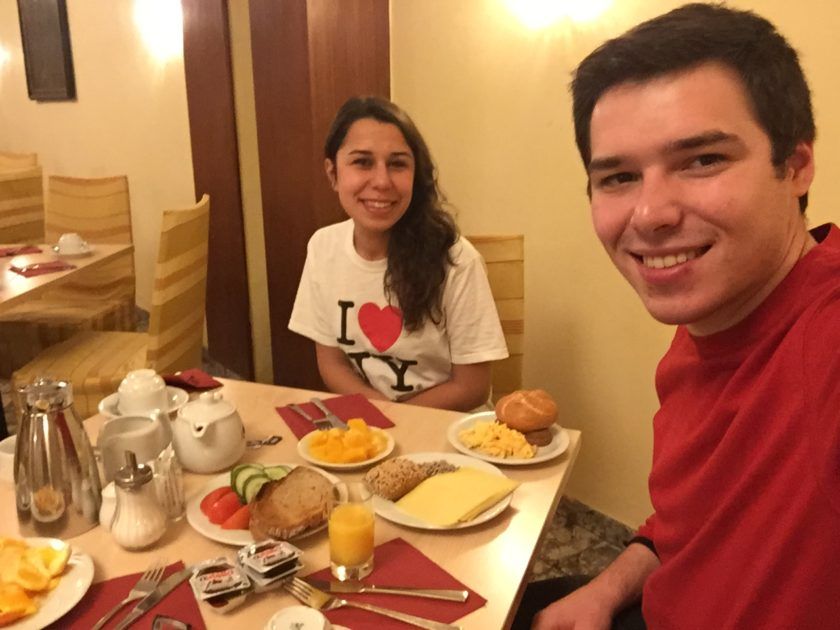
The hotel is in Vienna's traditional consulate area and located very close to Belvedere Palace. From the property, opposite Vienna's main train station and the Bahnhofs-City Shopping Centre, you can reach the city centre by public transport in just a few minutes.
VIENNA AIRPORT/GETTING AROUND THE CITY
Vienna is one of Europe's important capitals. That's why it's a city that's very easy to get to, both within Austria and from around the country.The city has an integrated ticket system. You can use a single ticket bought anywhere on all public transport. These tickets can be bought at metro stations and at shops along the street. You need to validate the ticket you buy at the machine inside the vehicle. Ticket checks aren't frequent. But there's no need to take the risk, because if you're caught without a ticket the fine is 60€.
Metro
Vienna has a large metro network with five lines. Of these lines, U4 and U6 use some sections of the Stadtbahn, built in the 1890s. On these lines there are bridges and stations designed by Otto Wagner, one of the most important architects in Austria's history. The metro runs between 05.30-00.30.** Metros are known as U-Bahn (Underground).
Tram
The world's largest Tram network is in Vienna. With more than thirty lines, the tram is considered one of Vienna's symbols. It's possible to get to almost every point in the city by tram.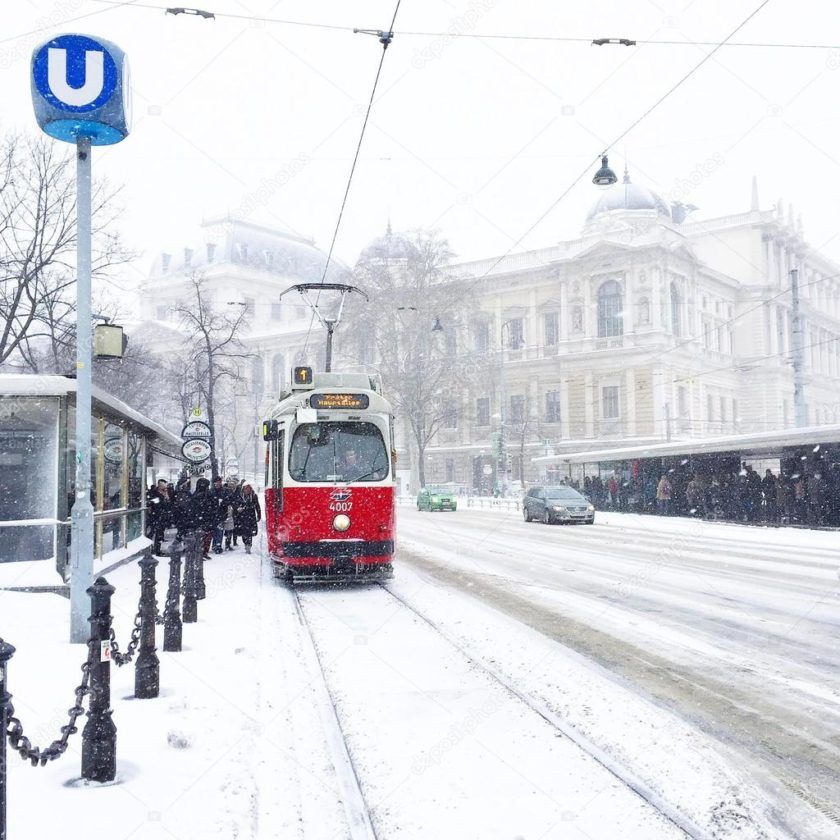
** Trams are known as S-Bahn (Straße). Tram frequency ranges between 4 and 8 minutes. Among the tram lines, the Ring Tram, going along the Ringstrasse, is one of the best ways to see the boulevard.
** For those interested, there are 2-, 3- and 6-day versions of the Vienna Pass, and 2-day and 3-day versions of the Vienna Card. The Vienna Pass is much more expensive, because as well as transport and skip-the-line access, it gives you free entry to many museums. The Vienna Card covers only transport and various discounts on museum entry.
** If you're a student, you'll have discounts in many places. So the chance that you won't need the city cards we mentioned is even higher; keep it in mind.
VIENNESE CUISINE
Besides the wonderful architecture, what excited us most was Vienna's food. Come, let's see what Vienna has.Schnitzel - Figlmüller
Before going to Vienna, we'd heard of the fame of Figlmüller's Schnitzel. While making our Vienna plan, we noted one more famous place like that.There's also this: even though such a recommended and popular place has 2 branches, finding a table wasn't going to be very easy. But we still say wait! Online reservations are possible. When we went there were no online reservations, but they're active now. 👍 Take it from us: if it's this full even in a snowy Vienna, I'm sure it's even busier in the spring-summer seasons.
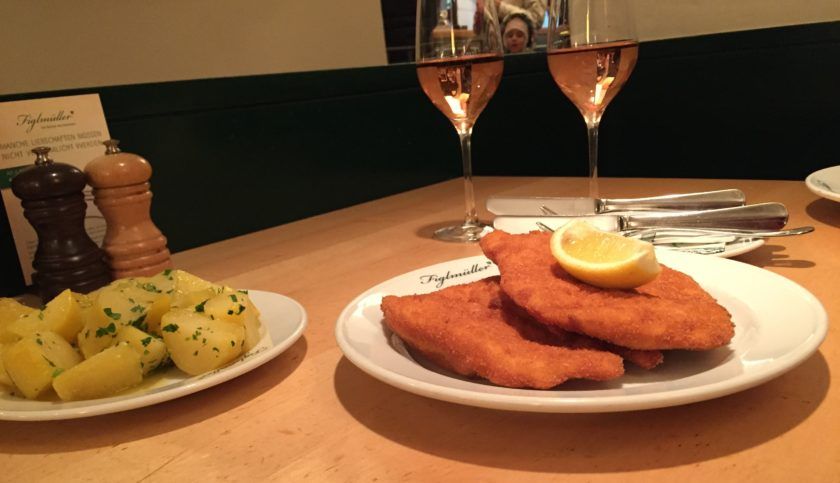
At Figlmüller, which has been doing this for more than a century, our choice was the Schnitzel made from chicken. This thin but huge Schnitzel is ideal for two people! It was truly wonderful! When you get back, you won't be able to eat Schnitzel again😋 You can order roast potatoes or salad on the side, and you should definitely order rosé wine. The place is so lovely and the food so delicious that you won't want to miss this lunch/dinner! We think you'll talk about it for years...
In total we paid 24.5€. Schnitzel 12.5€, a glass of wine 4€ and the potato salad 4€.
Apfelstrudel and Melange Coffee - Demel K.u.K. Hofzuckerbäcker
Imagine a patisserie serving since the 19th century, one of Vienna's most touristy spots for its desserts and coffees. Apple strudel is known as Apfelstrudel. I can say this is the most important dessert here. While Berna's choice was Apfelstrudel, of course my choice was chocolatey treats.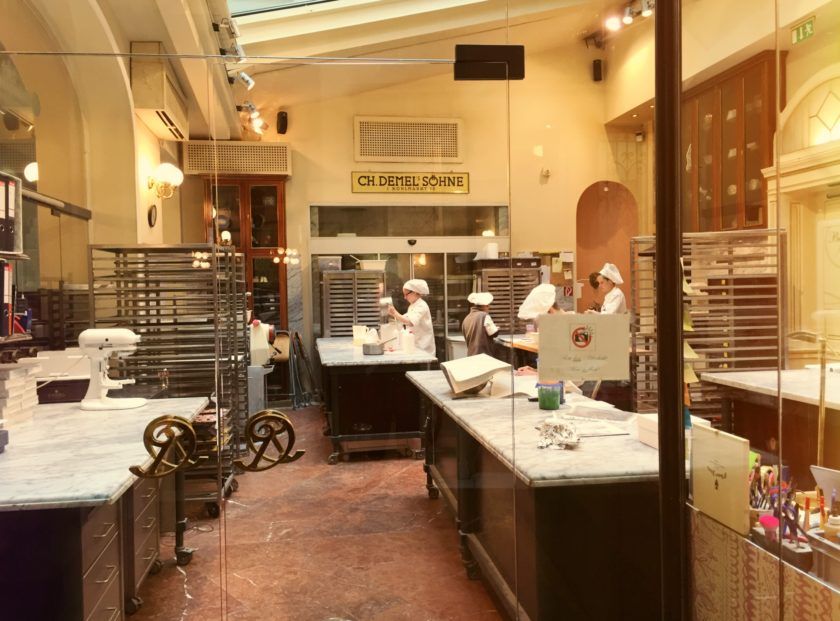
Inside the pastry, wrapped in very thin dough and lightly dusted with icing sugar, are apples fully cooked and flavoured with cinnamon. If you get this somewhat heavy dessert without vanilla, the way we chose, it'll feel quite light and you'll catch that lovely taste. 😋 The price of this lovely treat is 4€.
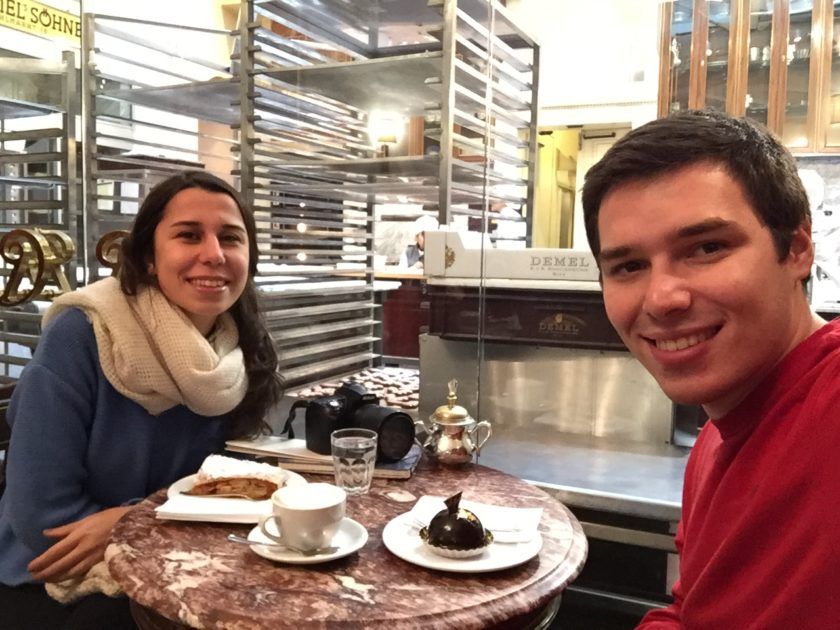
Aaand coffee! Vienna's famous coffee is the Melange. A classic made with espresso, milk, cream or milk foam. Smooth to drink and especially enjoyable in winter. Coffees are 6€ on average.
As at Figlmüller, at Demel too you can make an online reservation.
Street Food
On Vienna's streets you can find very tasty food. Our suggestion: these potato treats cooked on a griddle-like oven, called Maroni. "Kartoffelpuffer", prepared sliced or like a pancake.You can find them almost everywhere as you walk. The sweet snack on a stick can be addictive, careful. 😬 The price ranges between 2-3€.
My favourite in particular was the kartoffelpuffer. And a surprise: chestnuts! Yes, the winter must-have of our homes, our lovely street food, chestnuts, can be seen in the winter months next to the potatoes. Especially at the Christmas markets! If it's not New Year's, you may come across them at metro entrances, the zoo or the palace gardens.
SHOPPING IN VIENNA
When it comes to shopping, Vienna is a classic European city and offers you a great deal of variety. In the city you'll likely come across different store concepts of many shops found in Turkey, and boutique alternatives.There are particular shopping areas, but after Budapest, Vienna felt quite expensive to us. Still, let's briefly mention alternative places to shop.
Naschmarkt
Next to Karlsplatz, where St. Charles's Church (Karlskirche) is, is the Vienna University of Technology. From the right side of this square another famous street, Kärntner Straße, begins. This is also one of the shopping streets. If you carry on from the left side of the church, you reach the Naschmarkt. The Naschmarkt is an open-air market: colourful! Mostly food and drink. It's the kind of place to drop by in the late afternoon and buy something to take home. If there's music too, we say snack and enjoy it!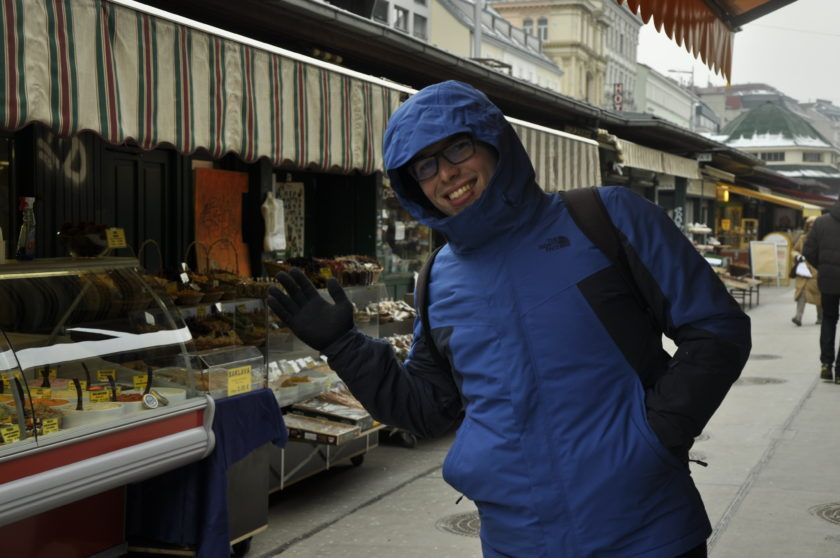
Mariahilfer Straße
If you carry on along the street opposite the Naschmarkt, further on your way will cross Mariahilfer Straße. This is one of Vienna's popular streets, lively with shops and cafés.Kohlmarkt Area
Go even if you're not shopping! Demel Cafe is here too. A street that's decorated sooo beautifully for New Year's but, I think, is always splendid and magnificent:) The view with tiny snowflakes falling had enchanted us. We're very lucky that we'll remember it like this: snow globe Vienna!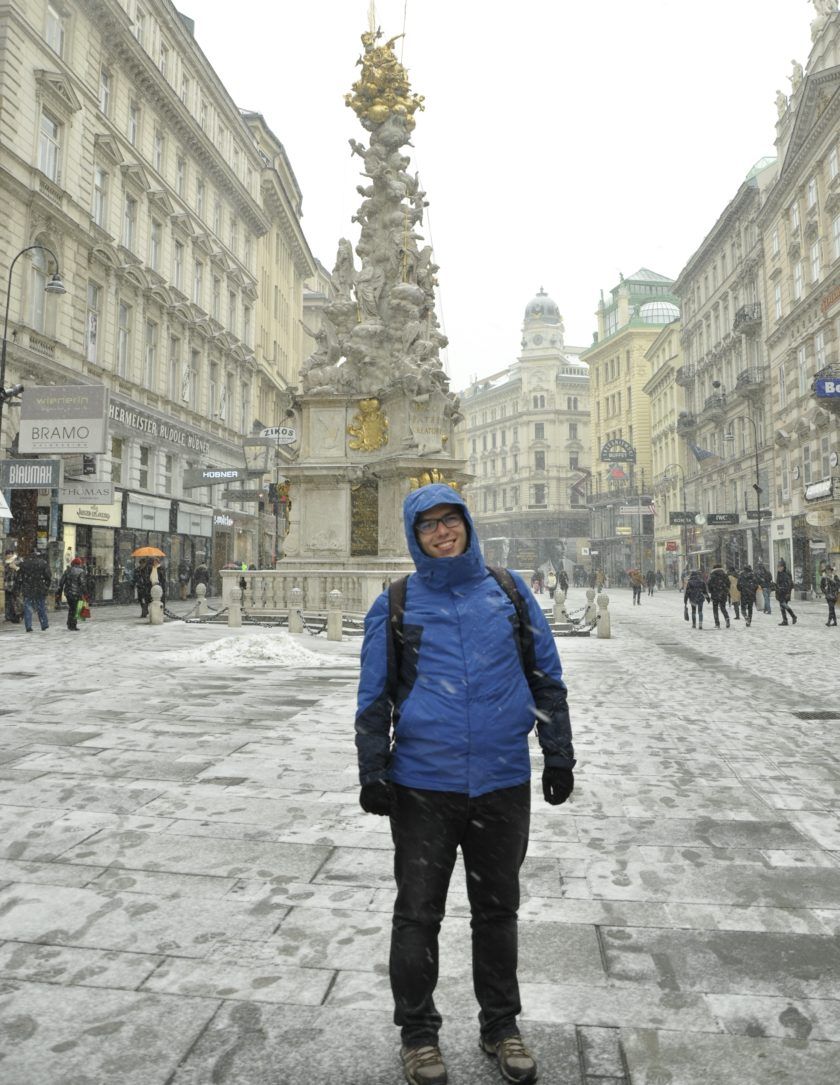
Before I forget, if you're into jewellery, we definitely recommend visiting the Kohlmarkt Area.
** Billa is a supermarket with branches all over Vienna; you can shop here.
** You can buy Manner wafers; they're very tasty and sold in almost all supermarkets.
VIENNA USEFUL INFORMATION
In Vienna there are tourist information offices at the train stations and the airport. There's also a large tourist information office in the city centre at 1, Albertinaplatz/Maysedergasse.Vienna is one of the safest cities in Europe. But when you go as a tourist, watch your pockets! As long as you're careful, you can spend trouble-free days in Vienna. There's just one scam scenario that has appeared recently: scammers disguised as police try to take your money with different scenarios. In such a situation, we advise you to say "I want to go to the police station".
Fire: 122 Police: 133 Ambulance 144
DO YOU NEED A VISA FOR VIENNA?
Yes, you need to get a Schengen visa to go to Vienna. Visas don't apply to Green (Special) and Grey (Service) passports. A visa is required for the Burgundy (Ordinary) passport.Schengen Visa application tips: click! You can find the documents required for a Schengen Visa here.
CYCLING IN VIENNA
There are 1246 km of bike paths in total, aimed at increasing bike use in most parts of the city. Especially in Europe, cycling has a very important place in the city rush.Touring Vienna by bike really is a different pleasure. If you can't find a place to rent in this sense, you can rent a bike from one of the 120 Citybike rental points. You can also return it to any bike station. The only condition for renting is having a debit or credit card. With the card you can register with Citybike. Since credit cards can be used, tourists are very comfortable too. :)
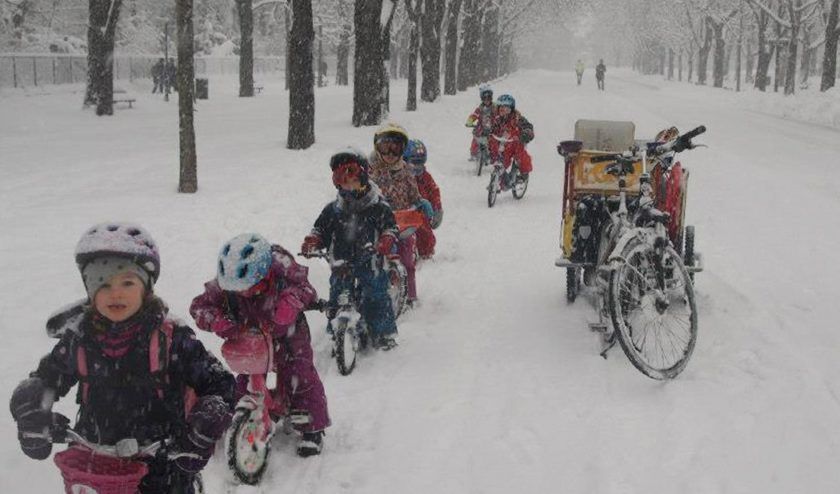
If you're thinking of touring Vienna by bike, without doing anything at the terminal you can register via the CityBikeWien link. You pay just 1€ as the first registration fee. The first hour of bike use is free; after that, renting is offered at increasing prices like 1€, 2€, 4€ as the hours go up. If you don't return the bike within 5 days, a payment of 600€ is taken from your credit card. You can follow the bike terminal locations and how full they are via the link.
 42 km
 214 km
 251 km