The city, shaped through history by the influence of different cultures, traditions and natural events, is now Greece's second-largest city and stands out as Greece's cultural capital. For us, the most important thing is that Mustafa Kemal Atatürk was born here! It takes its name from Thessalonike, the sister of Alexander the Great; only we Turks call it Selanik. Let's look together at the must-see places in this famous Thessaloniki.
AGIA SOFIA CHURCH - HAGIA SOPHIA
Some may ask why our starting point is the Church of Hagia Sophia. We set our route before going, of course; since I built the shortest route and the Church of Hagia Sophia is in the centre of Thessaloniki, we started the route from the Church of Hagia Sophia.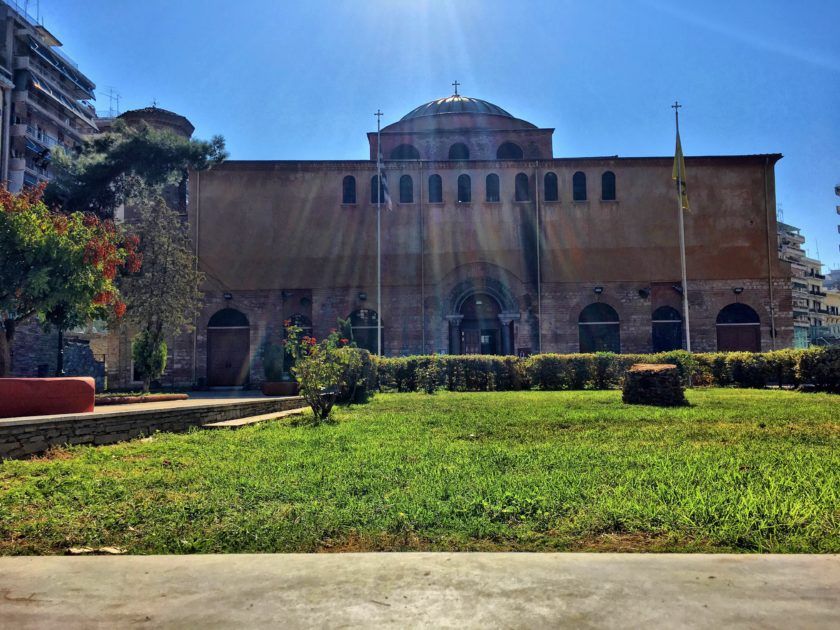
The church's origins go back to the 3rd century. If at first, like our friends, you're saying "This place looks familiar, there's this church in Istanbul too", yes, you're right. It looks a lot like our Hagia Sophia.
Why? Because of earthquakes in the 8th century, it was rebuilt based on the design of the Hagia Sophia in Istanbul. The building, which passed under Venetian rule for a while and became a Catholic cathedral, came under Ottoman protection at the start of the 1500s and became the central mosque of Thessaloniki. When the city passed to the Greeks in 1912, it was returned to the Christians. With the fire of 1917, like many buildings, it was badly damaged. In 1988 it entered the UNESCO World Heritage list.
In his Seyahatname, Evliya Çelebi gives this information about the Hagia Sophia Mosque; "There are 150 prayer niches in total, large and small, places of worship belonging to past sultans, viziers, ministers and benefactors. The most honourable of these is the Great Hagia Sophia Mosque, where prayers are accepted. The Hagia Sophia Mosque was built by Aysof, daughter of Yanko son of Madyon, in the city of Sofia."
ROTUNDA - ROMAN TEMPLE
The Rotunda, one of the first places to discover in the city, is one of the city's old religious buildings. Most sources also accept that this was the first religious building in the city.The building, built in 306, was later turned into a church, and after Ottoman rule into a mosque. The building has lived through almost all religions. Today, work is apparently being done to make this historic building an official church again.
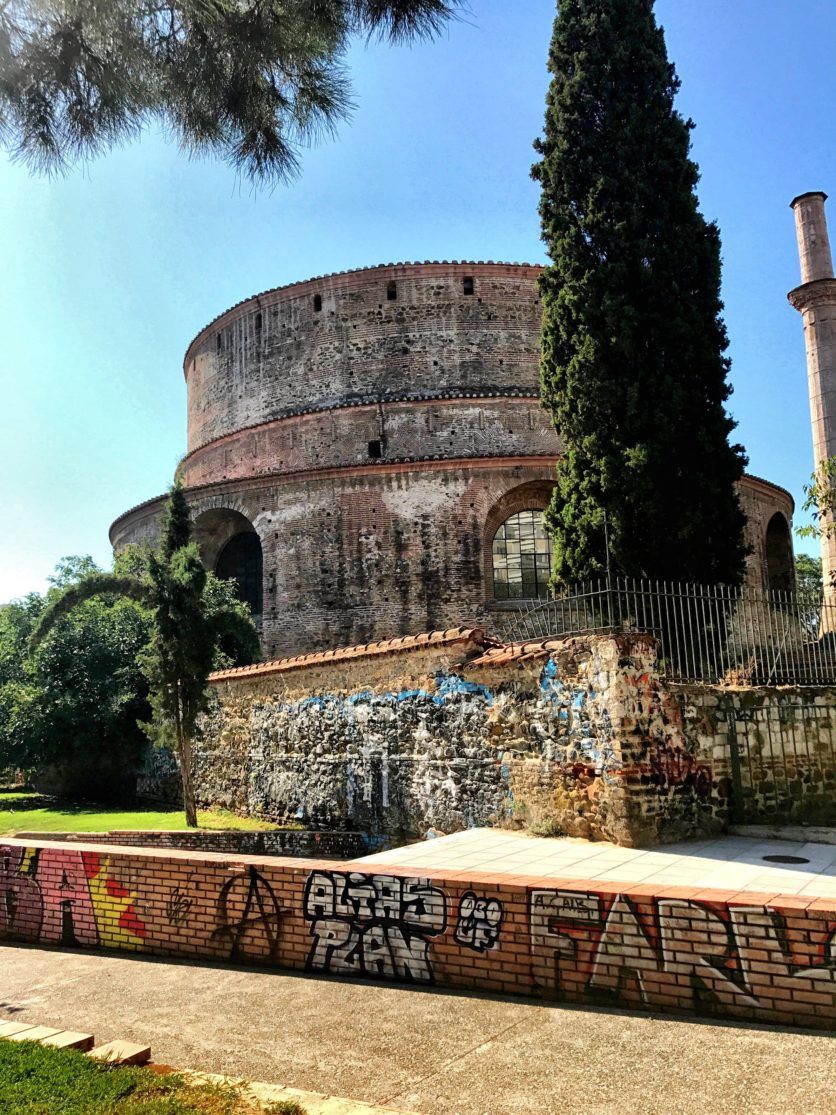
Note: Open to visitors between 09.00 – 17.00 except Monday.
Getting there: Agiou Georgiou Square
ATATÜRK HOUSE MUSEUM
The reason all of us have known about Thessaloniki since primary school is, of course, the sentence "Mustafa Kemal Atatürk was born in Thessaloniki in 1881." In the book I read more recently, "Atatürk: The Rebirth of a Nation", the foreign author Lord Kinross, whom I admire, describes how much our Ata loved Thessaloniki.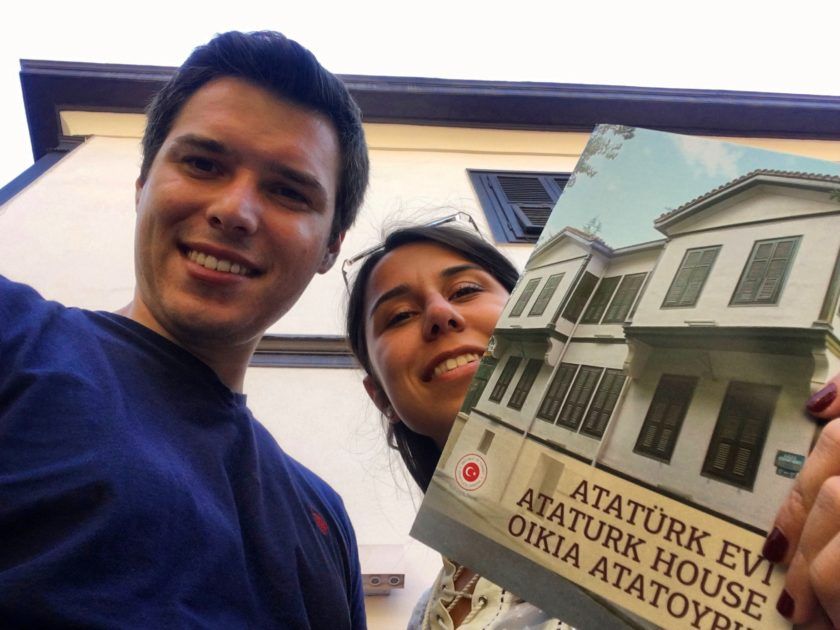
The house in Thessaloniki where our Ata was born has been opened to visitors. The visit is free. The house has 3 floors, and on each floor various information about Atatürk's life and achievements is presented to us visitors through images, videos and explanations.
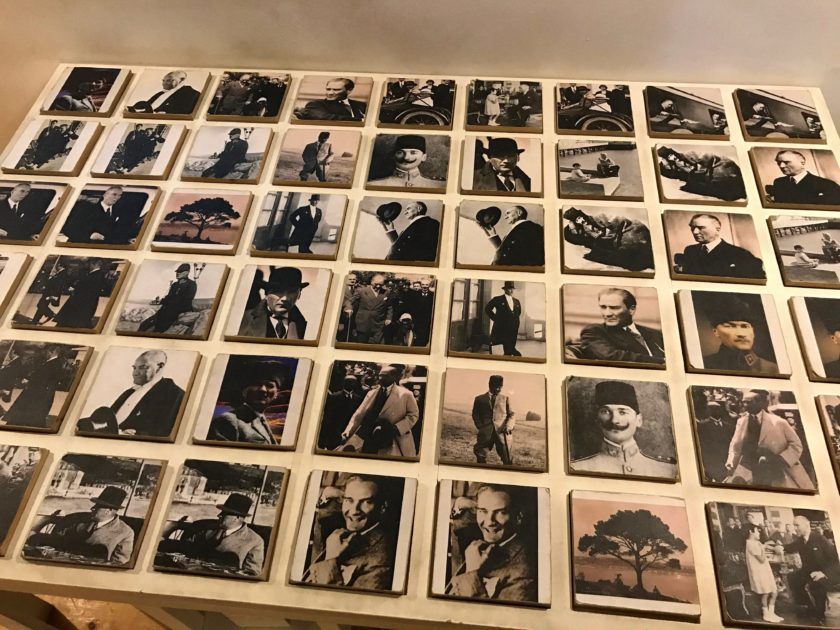
Note: Open to visitors every day between 10.00-17.00.
Getting there: Apostolou Pavlou Street, No: 17
ALACA İMARET MOSQUE - İSHAK PAŞA MOSQUE
It is one of the best-preserved Turkish works in Thessaloniki.According to the inscription at the entrance, Alaca İmaret Mosque was built in 1484 by İshak Pasha, one of the grand viziers of Mehmed the Conqueror and the Sanjak Bey of Thessaloniki in the time of Sultan Bayezid II. The site had an imaret (almshouse) and a Madrasa (school of theology). The building is laid out in an inverted T shape with a central rectangular space, two large domes, side sections on the west side and a main hall. While the main part of the building was the congregation area, the four side sections had areas for religious teaching lessons and food services.
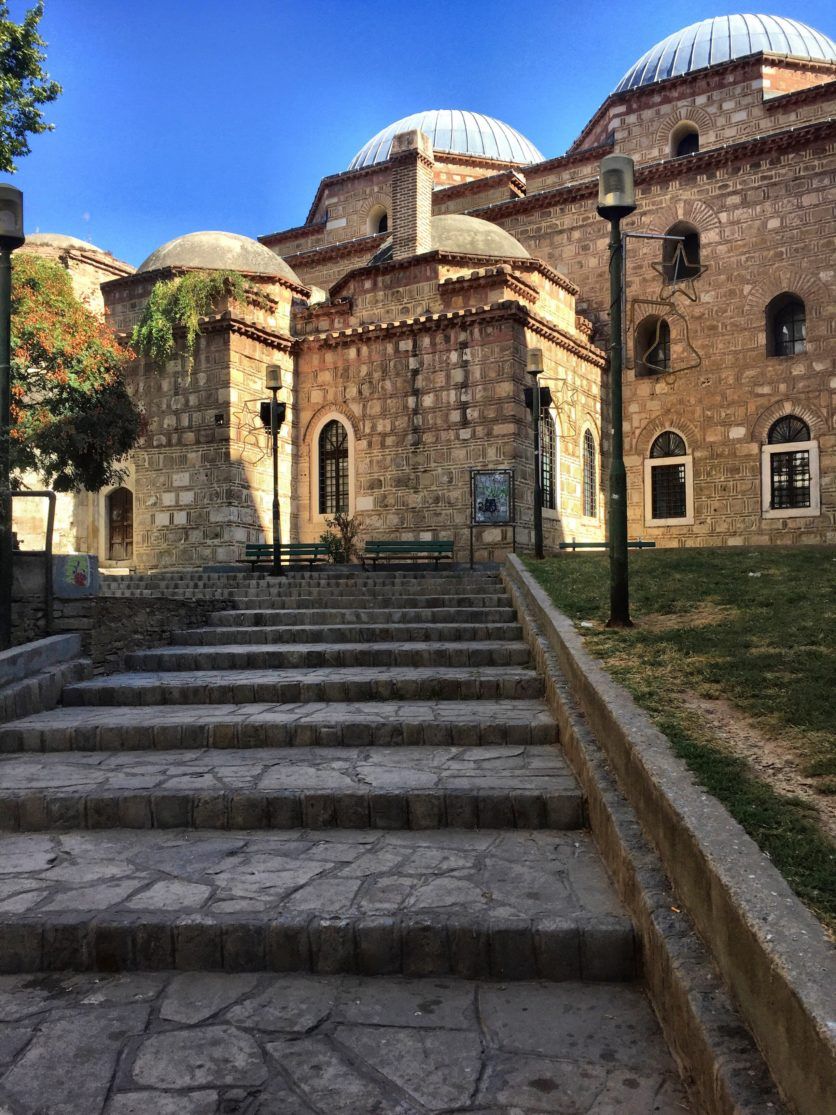
HAGIOS DIMITRIOS – CHURCH OF SAINT DEMETRIUS
When Constantine I accepted Christianity as the state religion in AD 324, it came down to us as a temple built by the Christians of Thessaloniki on the remains of Roman baths, in honour of the martyred Saint Demetrius. Because many believers came to pray, and because the myrrh (labdanum resin) from the tomb of Saint Demetrius healed serious illnesses, the temple became a centre of worship of Saint Demetrius. Although the church was somewhat damaged in Ottoman times, it has survived safe and sound to the present day. It can currently be visited for free. It's also open for worship. As with our mosque visits, you need to be careful about your clothing.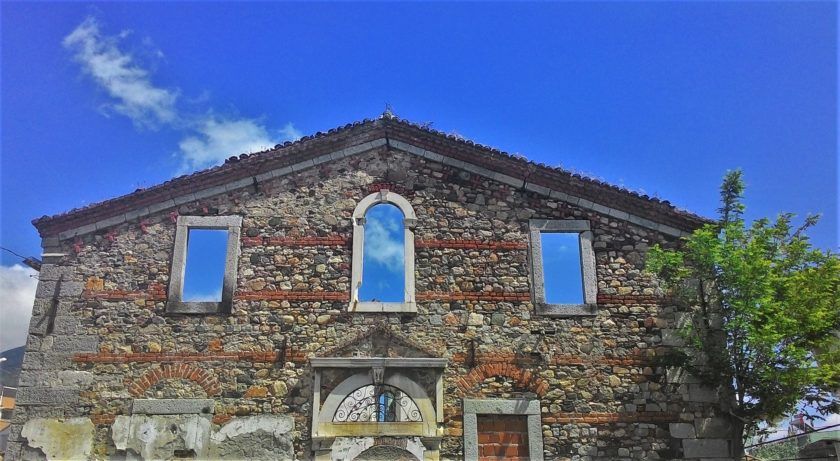
Note: Open to visitors every day between 08.00-22.00.
ANO POLI – BYZANTINE WALLS
It appears as Thessaloniki's upper town. It was badly damaged in the fire of 1917. It sits in the highest and northernmost part of the old city. Although no detailed archaeological excavations have been made in the area, it's thought that it wasn't continuously settled through the Hellenistic period and the Roman and Byzantine periods. That's why the first settlements were made by migrant Turks in the 17th century.When we say high, it really is challenging to get to, climb up and come down. So if your goal is to explore this area, consider yourself lucky if you have a car. Of course, even without a car it may not be very challenging for those in training. Our choice was to climb with a brisk walk!
We've climbed the hill; so what do we find? Houses from the Ottoman period and examples of classic Ottoman architecture, that is, the castle and walls built for protection in the Byzantine period, and of course the Trigoniou Tower too, await you travellers.
LADADIKA AREA
It takes its name from the shops that stood in the area many years ago and sold various oils and oil products. By the way, in Greek oil is 'ladi'.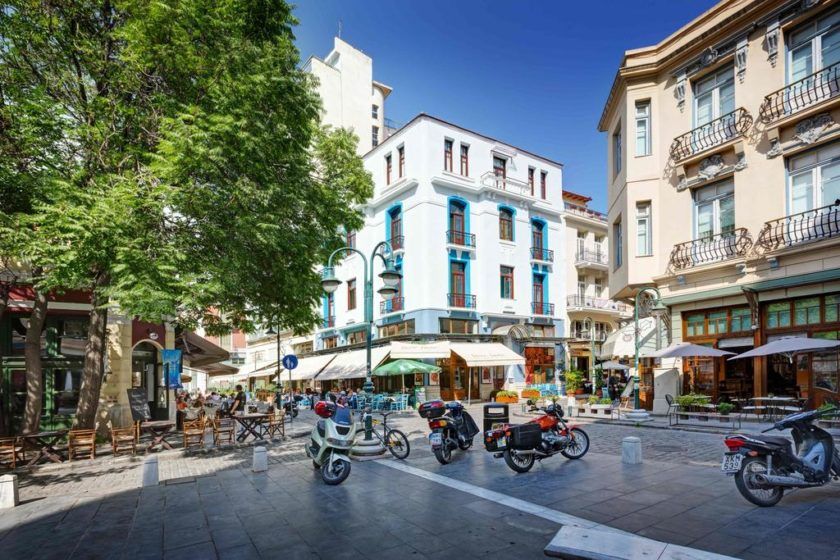
If you want to feel the real Greece, if you want to get drunk on Greek tunes and meze, the only place you need to go is: Ladadika! Ladadika, known as a market area when Thessaloniki was under Ottoman rule, is actually one of the places that best reflects what Thessaloniki used to look like. Ladadika is one of the areas you definitely shouldn't miss on a visit to Thessaloniki.
ARISTOTELOUS SQUARE
Just as every city has a main square, in Thessaloniki we find Aristotelous Square. It was designed by the French architect Ernest Hébrard for the new city plan after the disaster that destroyed the city in 1917.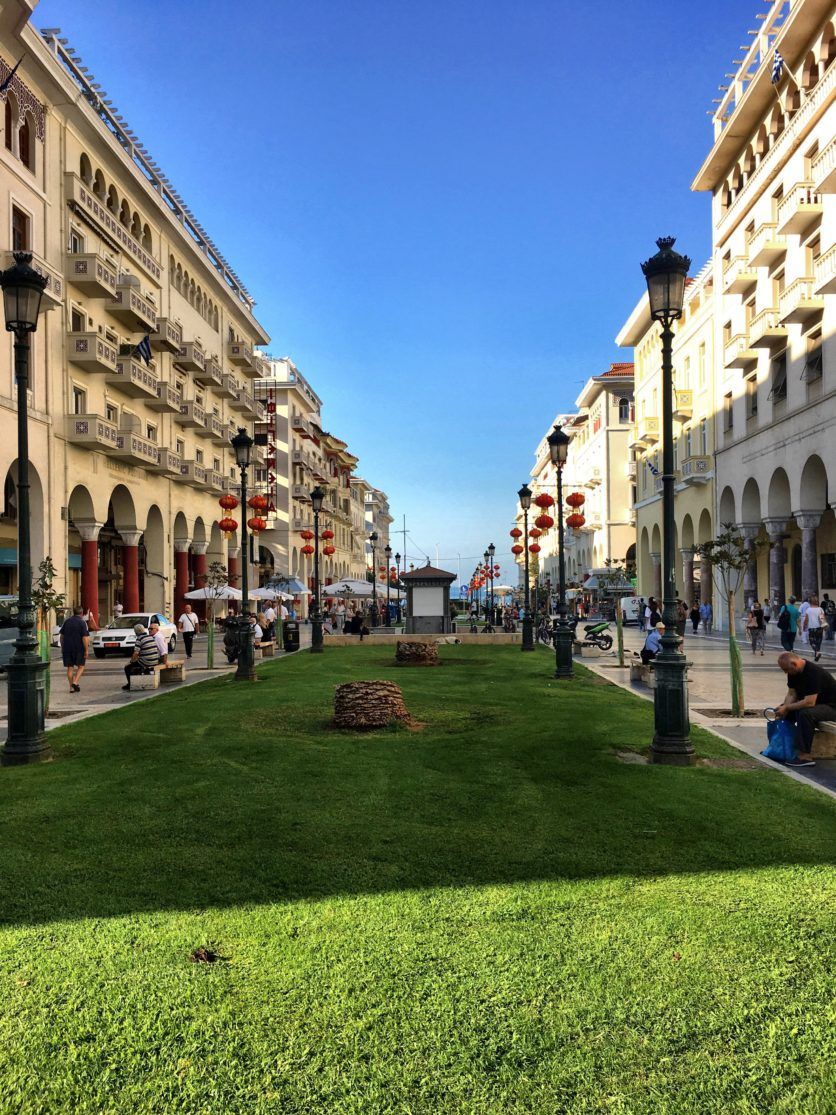
As well as having a very imposing look, the square makes up somewhat for Thessaloniki's visual shortcomings. When you walk down from the square, you salute the sea. My favourite thing about Thessaloniki is that every road leads to the sea!
WHITE TOWER
This tower has become the symbol of the city in every sense. Whether you go to 'Tourist Info' offices or look at the brochures handed out, this tower comes first.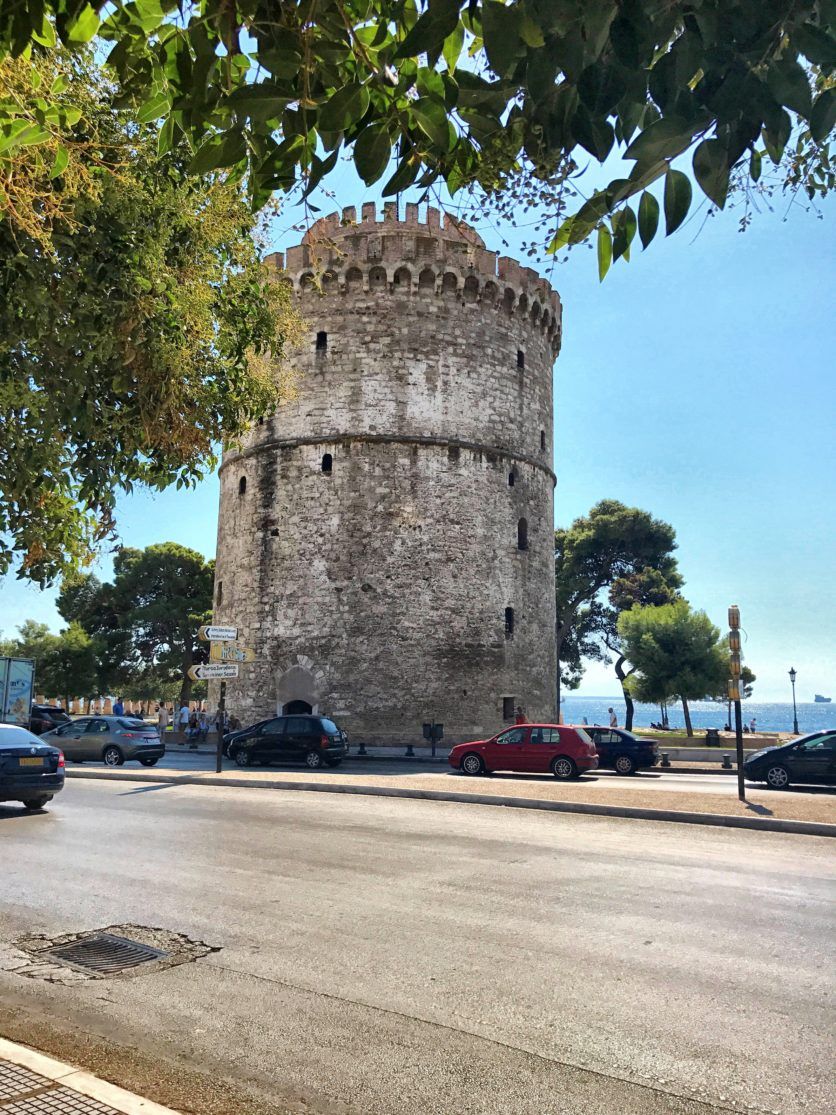
The tower is said to have been built by the Ottomans in place of an Old Byzantine Tower after Murad II captured Thessaloniki in 1430. According to some historians, the tower bears the signature of Mimar Sinan. The tower, once also used as a prison, was also known as the 'Bloody Tower'. When it passed to the Greeks in 1912, the tower was painted white in an attempt to symbolically cleanse it of its bad reputation. Although the white paint faded over time, the tower's name stayed the same.
Note: Open to visitors between 08.00 – 15.00 except Monday. There's an entry fee.
GALERIUS'S PALACE
Galerius, born in Bulgaria, was one of the leading high-ranking soldiers of the Roman Empire.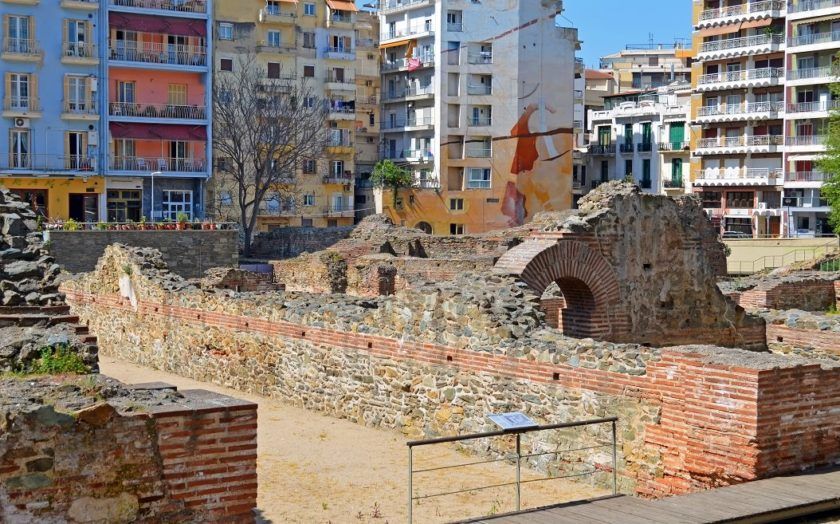
In 299, after his final victory against the Persians, Galerius chose Thessaloniki to settle in. In the southeastern part of this Roman city, on a huge site of 150,000 square metres stretching from the Rotunda to the sea and on the east side to the church of Hagia Sophia, he built an ostentatious palace block. Not only palace officials and servants lived here; the city's various service buildings and temples were here too.
For those curious about our other posts from the Greece tour, click the link!
 128 km
 188 km
 197 km