The Southeastern Anatolia region, with its people's tolerant manner and hospitality as well as its local flavours and historic places to visit, has become one of tourism's favourite regions in recent years. Especially in recent years, with GAP tours becoming widespread, many domestic tourists have started flocking to this region. Halfeti is one of the most beautiful places in this region you need to see. A history lies in these lands, even in the waters of the Euphrates. In 2000, as a result of building the Birecik Dam, unfortunately many villages ended up under the Euphrates river, and this situation, which left many people homeless, has now led to it being opened to tourism as a sunken city. Most of the local people there run "Sunken City" tours with their little boats with single-cylinder engines, and earn most of their living this way.
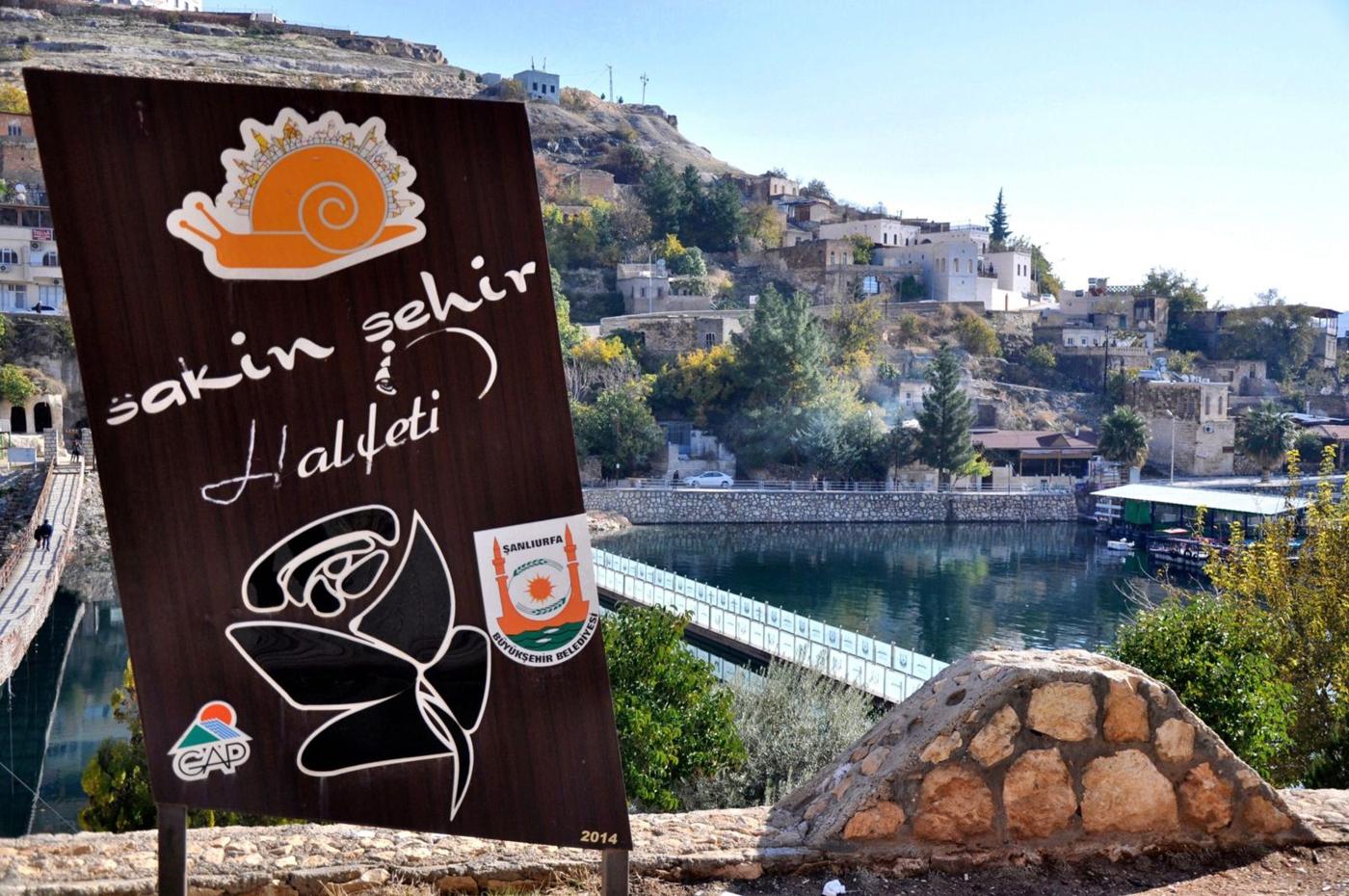
Halfeti district has also made our country proud by receiving the title "Cittaslow" - Slow City at the International Coordination Committee meeting.
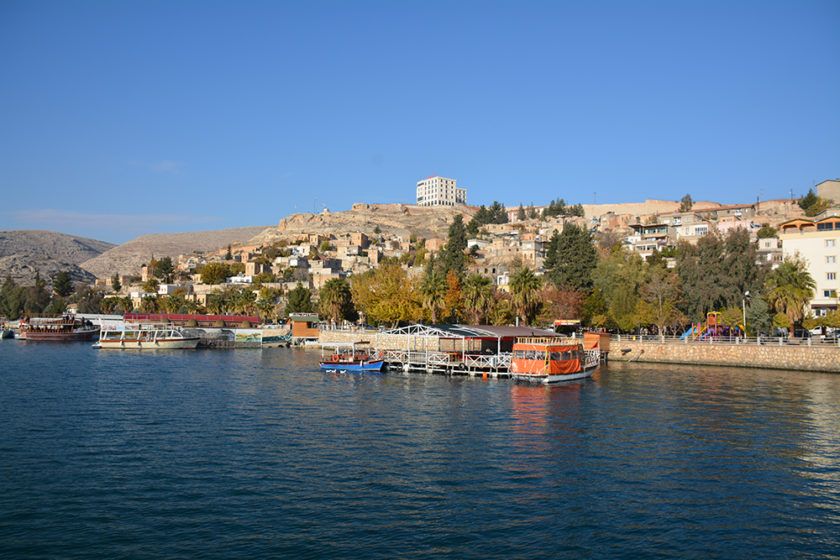
As soon as we set foot in Halfeti, while the sweet silhouettes of curious tourists brighten the surroundings, the houses reflecting Halfeti's sadness pull us into a jumble of emotions. Sharing its sadness, we watch silently… This view caresses our eyes. The greened shoreline, built on the slopes of barren hills and stony, arid land, grins like a straight line. The restaurants and boats lined up on the shore are waiting for the tourists who come. There's quite a demand! Some of the crowd are after food, some after sightseeing…
The history around the area goes back a very long way. The historical story begins with the Assyrians in 855 BC. Greeks, Syriacs, Arabs, Persians, Egyptians, Sasanians, Umayyads, Abbasids, and in 1146 the Romans and the Ottomans…
HALFETİ BOAT TOUR
At the pier you'll see boats with single-cylinder engines lined up in a row, all part of the cooperative. If you're only a few people, you can rent a private boat yourselves. Small private boats are rented for 100 TL, and because they're part of the cooperative, unfortunately there's no room for bargaining like before. If you've come with a big group, there are also big boats, which work out even cheaper. With a little bargaining we got on a big boat that was just leaving for 5 TL per person. Normally they charge something like 10 TL per person.
For Halfeti, known as the famous city under water, this boat tour is a must. An enjoyable tour on the Birecik Dam will be waiting for you. Although it's a river, the clarity and colour of the water look incredibly beautiful, so you can get wonderful shots. On the boat, if you like, there's also an audio recording telling Halfeti's history.
RUMKALE
As you go by boat, on your left you'll see the "Maiden's Cave", the cave of the Greek King's daughter. According to legend, the Gospel was copied in this cave. As for the cave's legend: the King's daughter fell in love with a shepherd. The King didn't allow it and imprisoned his daughter in the cave. The girl lived there for a long time.
As you move away from the Maiden's Cave, "Rumkale" greets you. Rumkale rises on sheer rocks. As we pass in front of it, our guide starts telling us about it. The castle is built at the point where the Euphrates River and the Merzimen Stream meet. Those who want can climb up the stairs to Rumkale.
Imagine a peninsula shaped like a drop of water, stretching towards a lake coloured by emerald green waters. Where the peninsula connects to the land, a great chasm has opened. Moltke, who visited Rumkale in 1838, said: "It's very hard to say where the rock ends and where the work of man begins!"
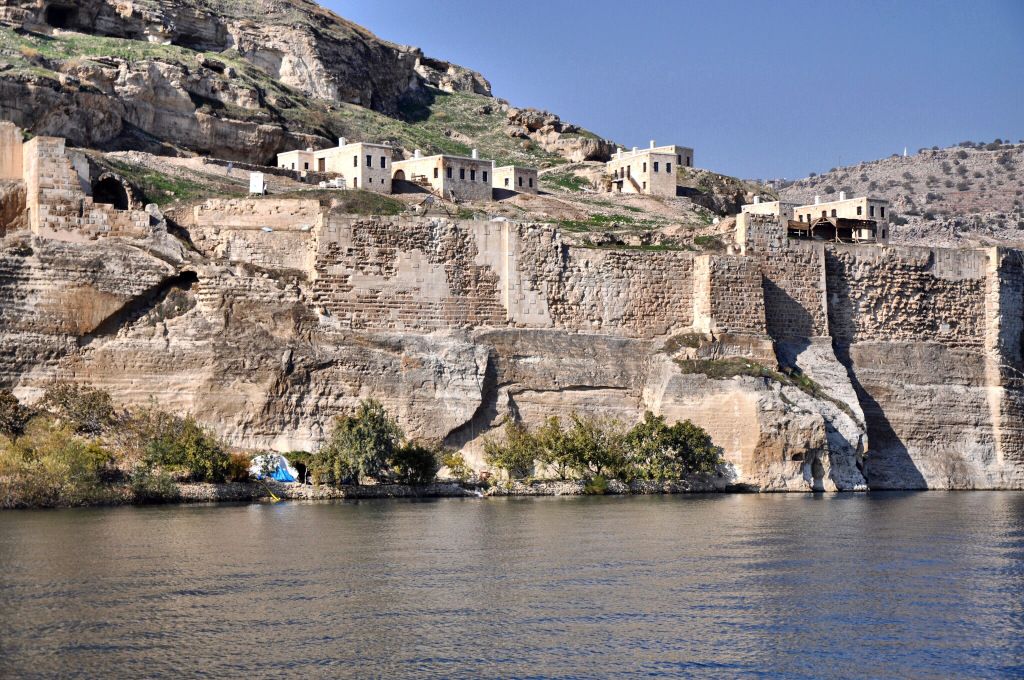
The castle was formed by carving the rock steeply, bringing out a natural rampart. Then a wall was built on top of these natural ramparts. On the walls at the tip, the bastions and loophole windows catch the eye. What's really interesting, though, is that in the 12th century a moat 30 metres deep and 20 metres wide was carved out where the Castle rises, to make defence easier.
At the top of the things that make Rumkale mysterious and interesting is that Johannes, one of Jesus' 12 apostles, wrote the Gospel here. A boat you rent from Halfeti drops you at the pier on the castle's west side and itself goes to the pier on the east side. Visitors (trusting a little in their walking abilities) wander in amazement from west to east around the castle, thought to have been built by the Hittites in 840 BC, above all the Cave of Johannes. Climbing up to the Castle looks a bit of an effort.
The most striking work at the top is the well. The well, 8 m wide and 75 m deep, was built to meet the castle's water needs. You go down into the well by steps. We chose not to go up. We're saving it for our next visit. There should always be a reason to come back, shouldn't there?
SAVAŞAN VILLAGE
Towards the end of the tour, that best-known scene appears before you. The mosque minaret rising from under the water. In this bay-like place, a three-storey school, a health centre, 16 houses and even a cemetery ended up under water. It's really very hard to believe, but under the water you're travelling on lies a history.
The big boats take a break at a small place just a little beyond the Sunken Mosque. Here you can sip your tea in front of the unique view.
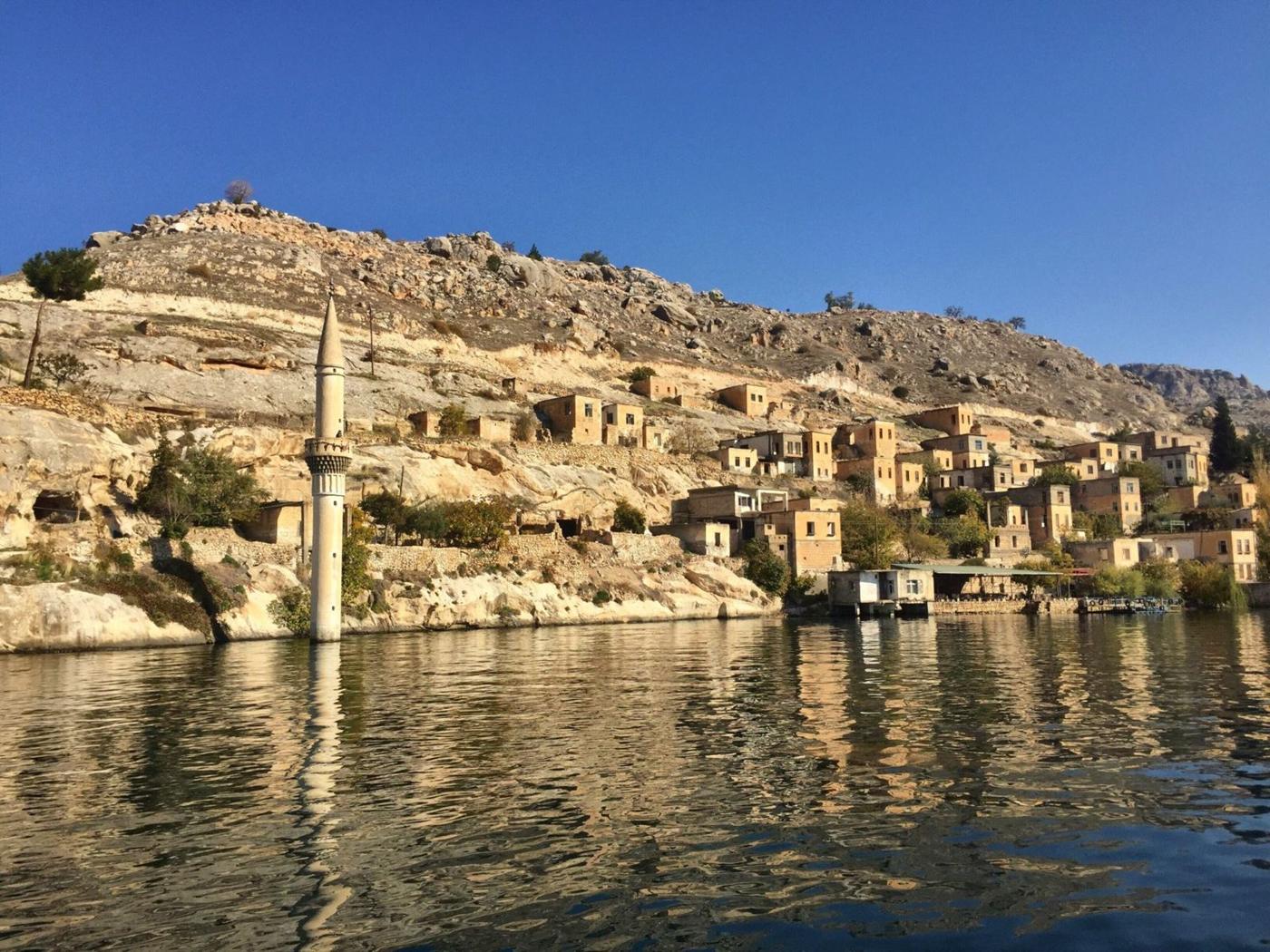
Its garden is fertile, and it offers us the fruit it has picked. After a long breather, we leave Savaşan Village alone with the waters of the Euphrates and head back on our boat with a gentle touch to the shores. When we reach Halfeti, we settle into the restaurant in front of which we'd boarded the boat. When you come here, if you like, you can eat şabut fish. Şabut is a fish native to the area, found only in the Euphrates River. Those who've tasted the fish before say "it's a wonderful flavour".
THE BLACK ROSE
At the top of the first things you hear when you say Halfeti is the "Black Rose". Halfeti is the only place in the world where the black rose grows. But unfortunately not everyone who goes gets to see the black rose. If you go to Halfeti in May, your chance of seeing a black rose is very high. In other months you don't have much chance of seeing one. But we're among those who managed to see a few in November.
HOW TO GET TO HALFETİ?
Halfeti, by its location, lies right between Gaziantep and Şanlıurfa, and one side of the Euphrates belongs to Gaziantep and the other to Şanlıurfa. Halfeti is on the part belonging to Gaziantep. Going from Gaziantep on the Şanlıurfa road, you take not the first but the second Birecik exit and then follow the Halfeti sign. After about 20 minutes on a village road you'll reach Old Halfeti.
Old Halfeti, about 100 km from Gaziantep, takes around 1.5 hours.
You can reach our posts on Gaziantep's places to visit and places to eat from the links.
 48 km
 192 km
 192 km