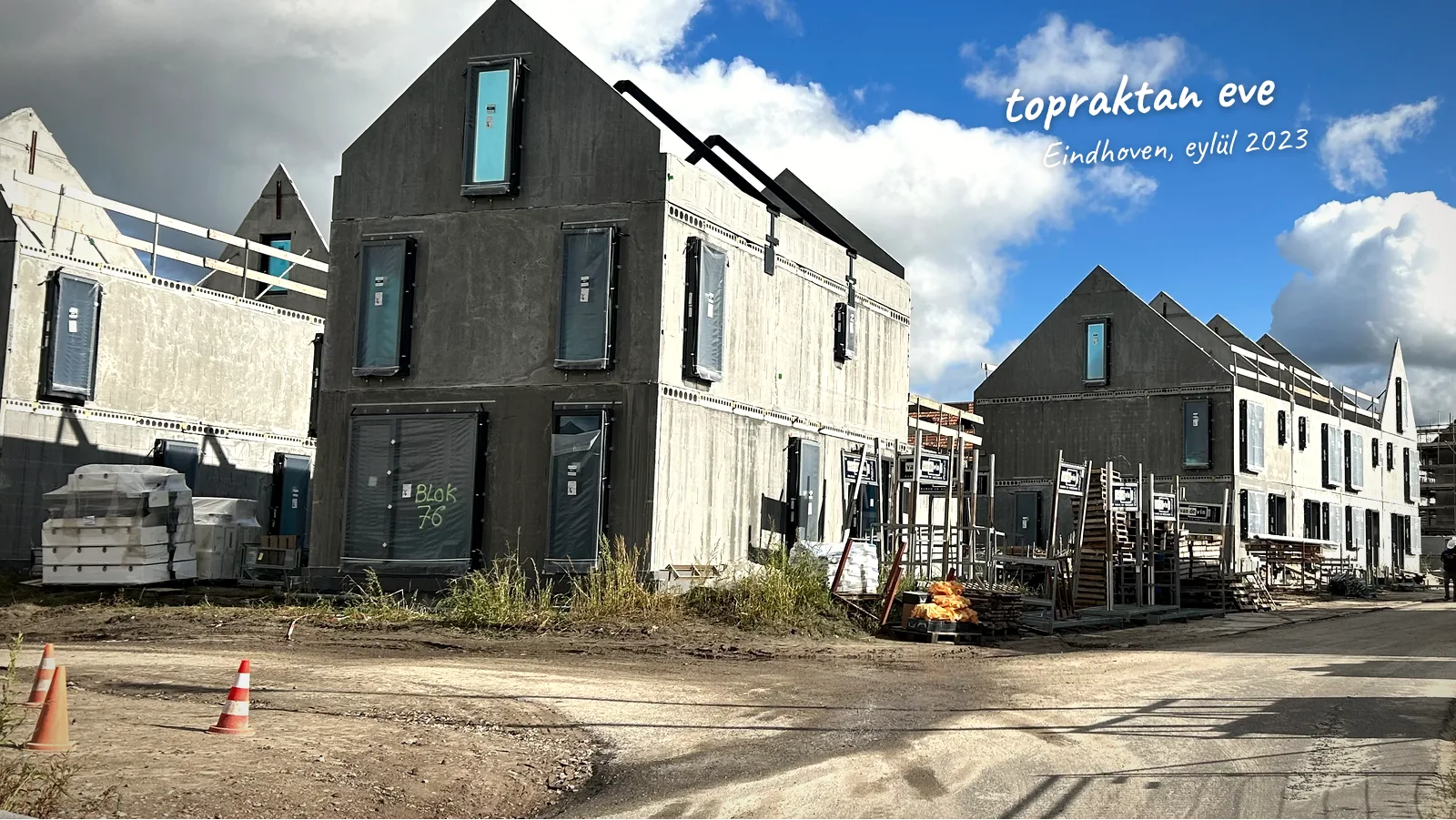
In the Netherlands, buying a home that is still being built, or sometimes not even started, is called nieuwbouw (new build). We signed for such a home in Eindhoven in 2022. In this post we explain how we got into the queue, how the payments work and which costs you won’t see on the price list.
It all started with a walk
In our first months after moving to the Netherlands, before my wife and son arrived, I used to go for walks around Blixembosch. I saw an empty plot with construction signs and emailed right away. A few weeks later they replied: “You are on the waiting list.” At the time I didn’t know how the system worked.
The registration system: first come, first served
We later learned that when a project is announced, a registration day and time are set (for example Saturday at 9). At that moment everyone can register, and a priority order is formed for each home. Whoever registers first for, say, house number 5 in block B has priority. If that person completes the process they get the house; if they drop out, it goes to the next person. Some projects use a lottery instead of a queue, so always read the rules on the project’s sales page.
Our project had already gone on sale in February-March, so they put me in the queue. Then a buyer pulled out and they called me: “A home has become available for you.” We started the process in August and went to the notary to sign in October.
Delivery is given as a “quarter”
We signed in October 2022, and delivery was planned for summer 2024. They don’t give an exact day; delivery is usually kept open as a window of one or two quarters (for example Q3-Q4). Keep your rental contract and moving plans flexible.
How the mortgage and staged payments work
We took out the mortgage (hypotheek) for the full amount right at the start, but at first we only paid for the land. Until the building is handed over, what you actually own is the plot.
The construction cost waits in a separate account within the mortgage, the construction deposit (bouwdepot). The builder usually splits the work into 8-10 stages (termijnen). These stages set both the progress of the build and the payments:
- A stage is completed.
- Usually within a month, the builder sends you the invoice for that stage.
- You forward the invoice to your mortgage provider.
- The mortgage provider pays the builder from the bouwdepot (or pays you, and you transfer it).
Two terms to know:
- Bouwrente (construction interest): Interest on the costs the builder made for the land and early stages before you signed. It is usually included in the purchase price; check your contract.
- Depotrente (deposit interest): The interest you receive on the money still in the bouwdepot. As stages are paid, the deposit and the interest you earn shrink, but your mortgage interest stays the same. This gap is called interest loss during construction (renteverlies).
Source: Hypotheker, Bouwrente bij nieuwbouw (checked November 2026).
The real surprise: costs on top of the price
This is our most important tip: set aside a serious extra budget on top of the sale price. We suggest 30% to 50% of the sale price. For a €500,000 home, for example, think of an extra €150,000-250,000. Where you land depends on the quality and level of luxury you want.
Why so much? Because the home is handed over as four walls and windows:
- Kitchen: The standard kitchen often doesn’t suit the habits and taste of Turkish families in particular.
- Bathrooms: The standard bathrooms are very plain and uniform.
- Garden and garage: If there is a garden or garage, finishing it is usually up to you.
- Extras (meerwerk): The home comes with a 40-50 page specification and a list of extra options. Every extra you choose comes on top of the purchase price. In our project, adding a socket or running a new socket line cost around €150-200. Even just a conduit to the outside for an electric car charger (not the cable itself) is a separate item.
Options have deadlines
You have to choose your extras before the deadline set for each stage. If you decide before then, the builder does the work for an extra fee. Ask for the specification and option list early and put the deadlines in your calendar.
Checklist before you sign
- Ask for and read the specification and option list before signing.
- Plan an extra budget of 30-50% of the sale price and include it in your mortgage calculation.
- Put the option deadlines in your calendar.
- Remember delivery is given as a quarter, and keep your rental contract flexible.
- Have a mortgage adviser calculate what bouwrente and interest loss mean for you.
This post describes our own experience and is not financial or legal advice. Talk to a mortgage adviser (hypotheekadviseur) about your situation. Prices are from our 2022-2023 project; last checked: November 2026.