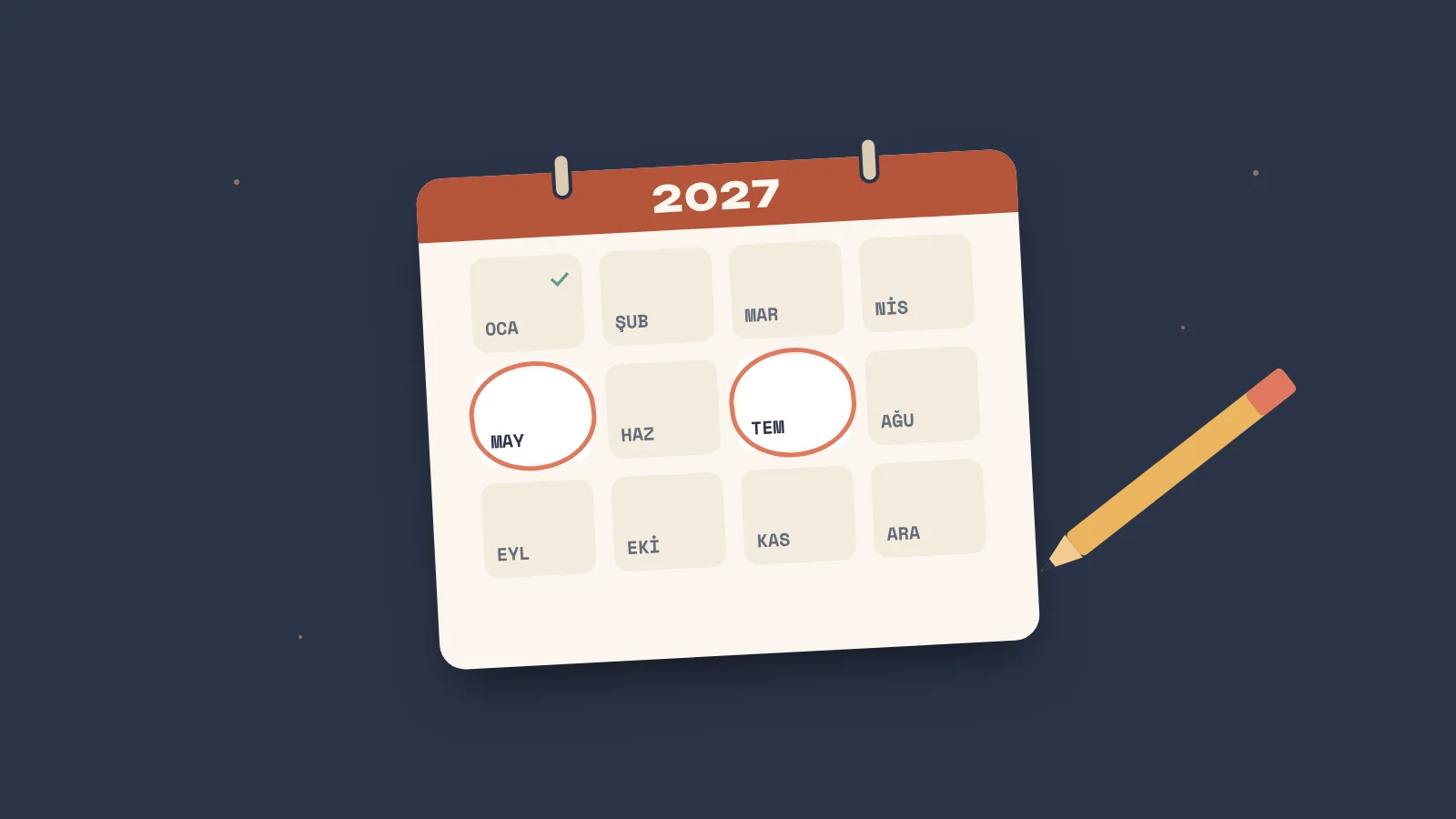
We moved to the Netherlands in 2022: I came in May, Berna in July. In 2027 we both reach five years. To avoid leaving the citizenship application to the last minute, we made ourselves a countdown. This post is that timeline: what we do when, and why in that order.
We wrote about what happens to our Turkish citizenship in a separate post: Dutch and Turkish citizenship: our plan for keeping two passports.
First: find your own start date
The first line of the timeline is the day your five years are complete. For citizenship, this period counts from the day you first registered with the municipality (BRP). You can find the date in MijnOverheid, under Persoonsgegevens, in the “Datum inschrijving BRP” row.
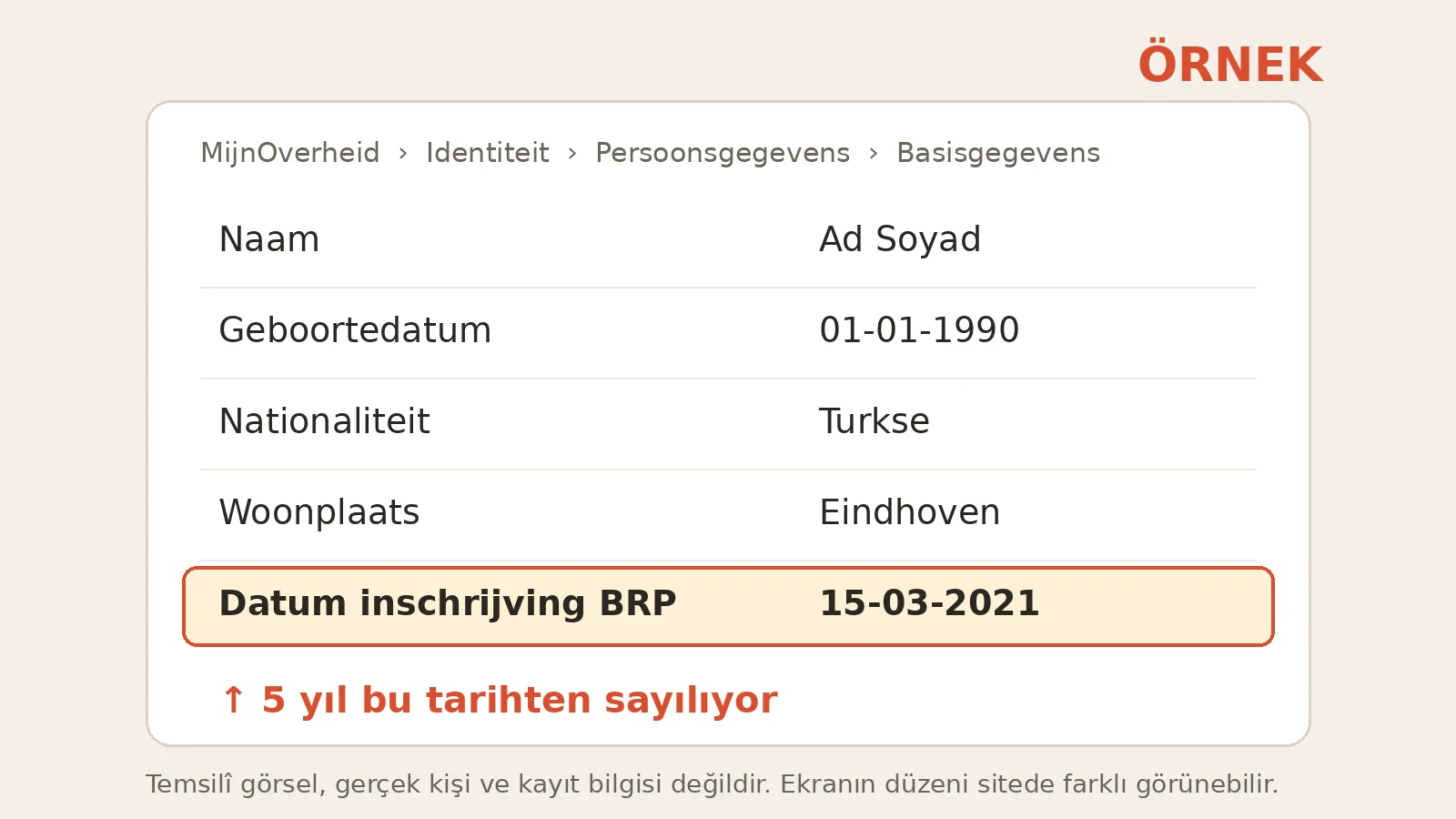
The five years also have to be uninterrupted: the Netherlands must be your main residence, there must be no gap in your municipal registration, and you must always have renewed your residence permit on time.
Source: IND, Main residence
Now: the exams
We started taking the inburgering (civic integration) exams before we became eligible to apply, and I recommend this to everyone. Our rule: all exams finished at least 6 months before the application date, so a resit or a delayed result doesn’t push the timeline.
The two exams we found hardest were KNM (knowledge of Dutch society) and speaking. And a mistake we made: we left two years between KNM and speaking and the other exams. After that long, getting back into preparation is really hard. My advice: book the exams as close together as you can.
A2 or B1?
This question causes a lot of confusion, because there are two separate rules.
The citizenship rule: according to the IND, for citizenship you must have passed the integration exam at least at A2 level. This doesn’t depend on which residence permit you came with.
The residence permit rule: the integration law in force since 2022 (Wet inburgering 2021) requires people who stay in the Netherlands “for a non-temporary purpose” to complete integration at B1 level within 3 years. Work permits and the permits of family members joining someone with a temporary permit count as a “temporary purpose”. So people who came as HSMs, and family who came with them, don’t have this obligation. People who got a residence permit as the partner of a Dutch citizen do.
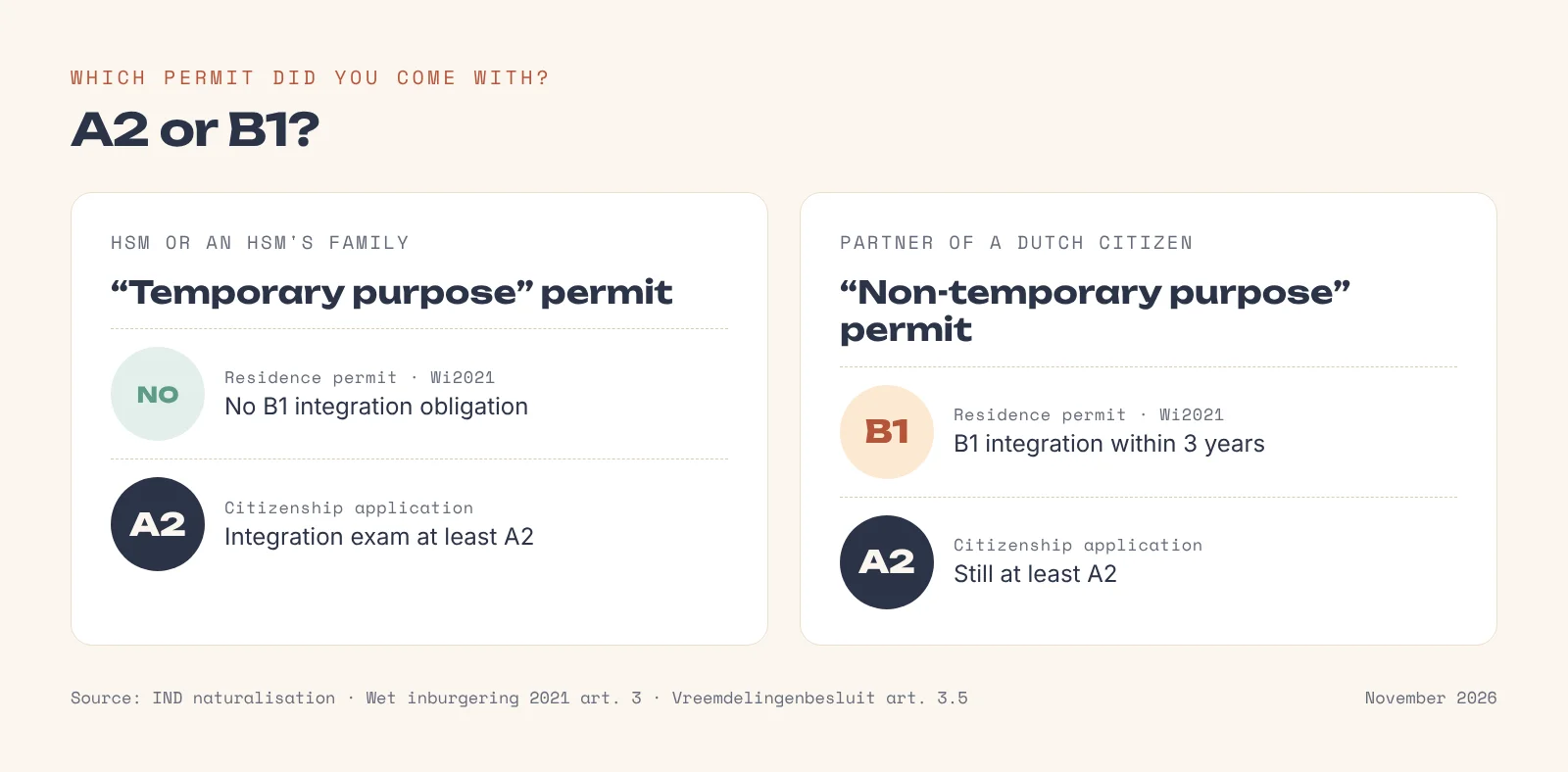
In practice: if you came in 2025 as an HSM or as an HSM holder’s partner, you have no B1 obligation and A2 is enough for citizenship. If you came in 2025 as the partner of a Dutch citizen, you have a B1 integration obligation, while for the citizenship application itself the rule is still A2. The government has two plans, neither of them in force yet: raising the language requirement for citizenship to B1 (a motion in the Dutch parliament on 16 November 2026 asks for the bill to be submitted before April 2027), and raising the required period from 5 to 10 years (the bill went to public consultation in September 2025; Rijksoverheid). IND’s page still says 5 years and A2 today. We built our timeline on today’s rules and are following these plans. Check your own situation with DUO before booking an exam.
Sources: IND, Becoming a Dutch national through naturalisation · Wet inburgering 2021, article 3 · Vreemdelingenbesluit 2000, article 3.5
The question that sets the timeline: who goes first?
One partner doesn’t have to become Dutch first. You can both apply at the same time, and it’s cheaper: at 2026 fees one person pays €1,139 and a joint application with your partner costs €1,454. Two separate applications add up to €2,278, so applying together saves about €800. Each child under 18 added to the application costs €168.
We still apply one after the other. The reasons:
Turkish citizenship. If we apply together, we both have to give up Turkish citizenship. Applying one after the other lets the second person become Dutch without giving up Turkish citizenship. Details are in the other post. For us this matters more than the difference in fees.
Language level. If you apply one after the other, the order matters. Berna’s residence permit depends on my residence permit. If I had become Dutch first, her permit would have turned into a “partner of a Dutch citizen” permit and the B1 integration obligation above would have started. According to people who went through this, the level at DUO also switches to B1 and you can no longer register for the A2 exam. So Berna becomes Dutch first, and my permit doesn’t change.
If your order is the other way around, the partner applying second can avoid this by getting their A2 diploma before their permit changes.
Source: IND, Fees
July 2027: Berna applies
Berna reaches five years in July and will apply then. We’re adding our son to her application; children don’t become Dutch automatically, they have to be included. Adding them later is also possible, and free within the first year after the parent’s naturalisation.
You apply at the municipality and pay the fee when you apply. The IND has a legal decision period of 12 months. After approval the King signs the decision, but citizenship only starts at the ceremony (naturalisatieceremonie). Once we’ve been through it, we’ll add our own waiting time and ceremony notes here.
Source: IND, Becoming a Dutch national through naturalisation
After Berna’s ceremony: me
I reach five years in May, but I’m deliberately waiting until after Berna’s ceremony to apply. This wait is the price of keeping my Turkish citizenship.
A note: in the Netherlands, people who have been married to or living as registered partners with a Dutch citizen for at least 3 years can apply without waiting five years. Your partner doesn’t have to have been Dutch for those three years; being Dutch on the day you apply is enough. We don’t need it, but it may help people whose partner became Dutch before their own five years were up.
Source: IND, Exceptions to the 5-year term
Our timeline at a glance
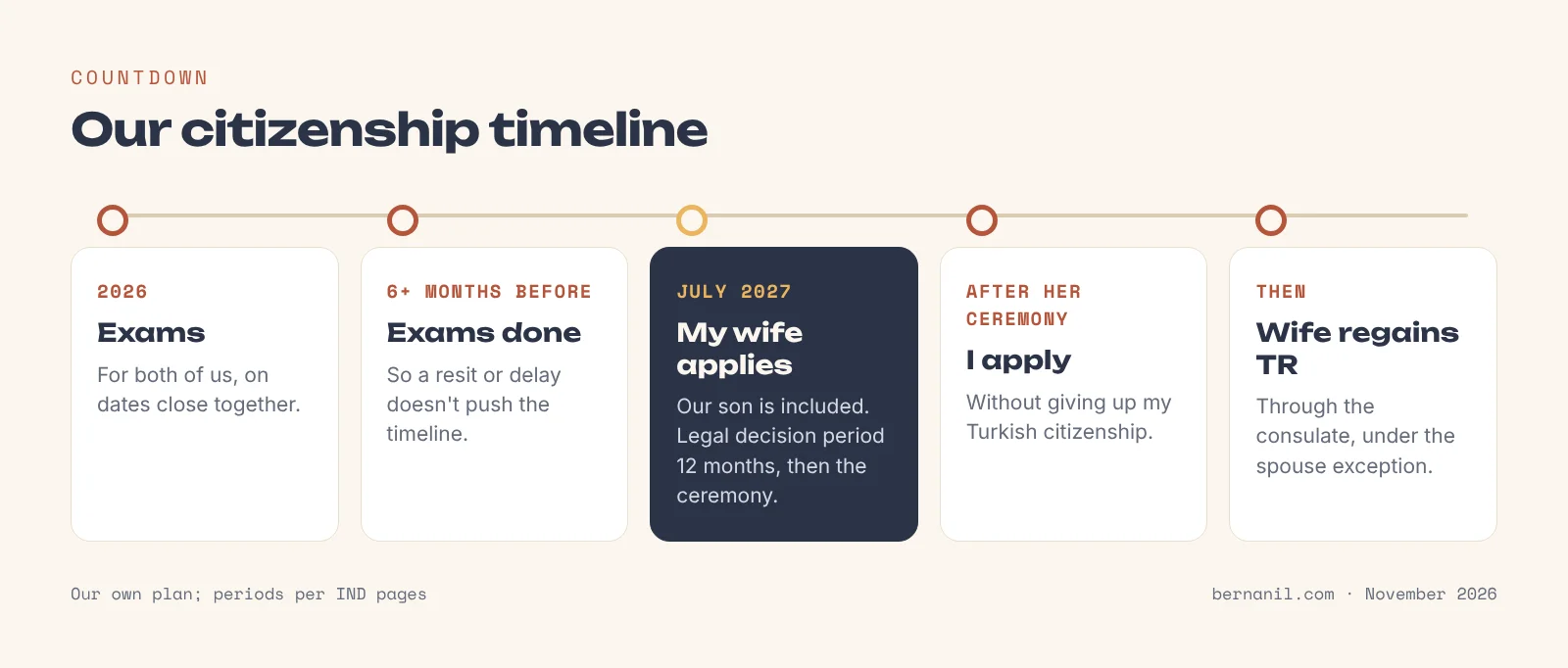
- Now (2026): exams, for both of us, on dates close together.
- At least 6 months before applying: all exams done.
- July 2027: Berna’s application, with our son included.
- After Berna’s ceremony: my application.
- Then: Berna takes back her Turkish citizenship.
This post describes our own preparation and research; it is not legal advice. Rules and fees can change; check the IND and DUO pages before applying.