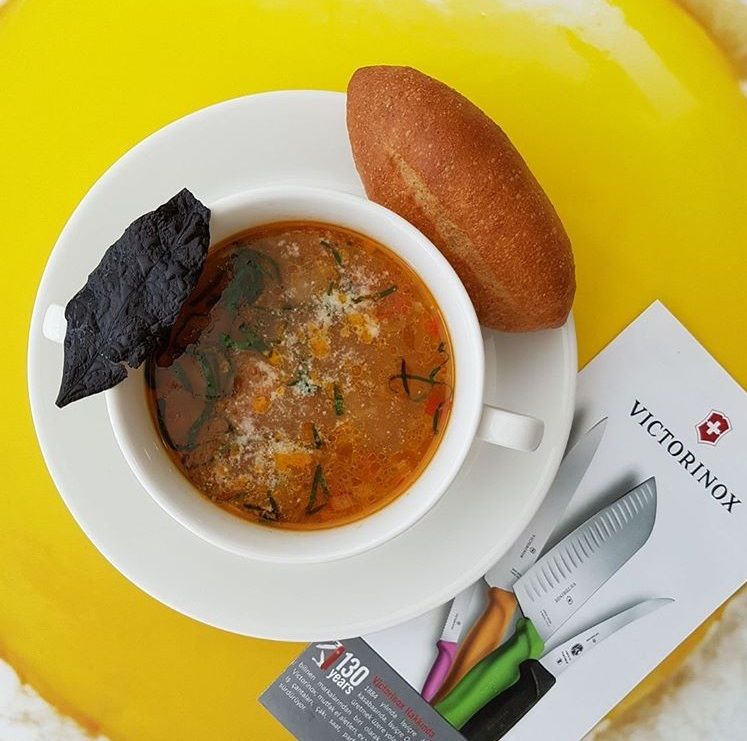
With Chef Eren Erdem at Usla Akademi, we went exploring knife cutting techniques! In a few hours we made a full 3 recipes. We already love going into the kitchen together and eating, and it was a lovely day where we also picked up the tricks of new recipes.
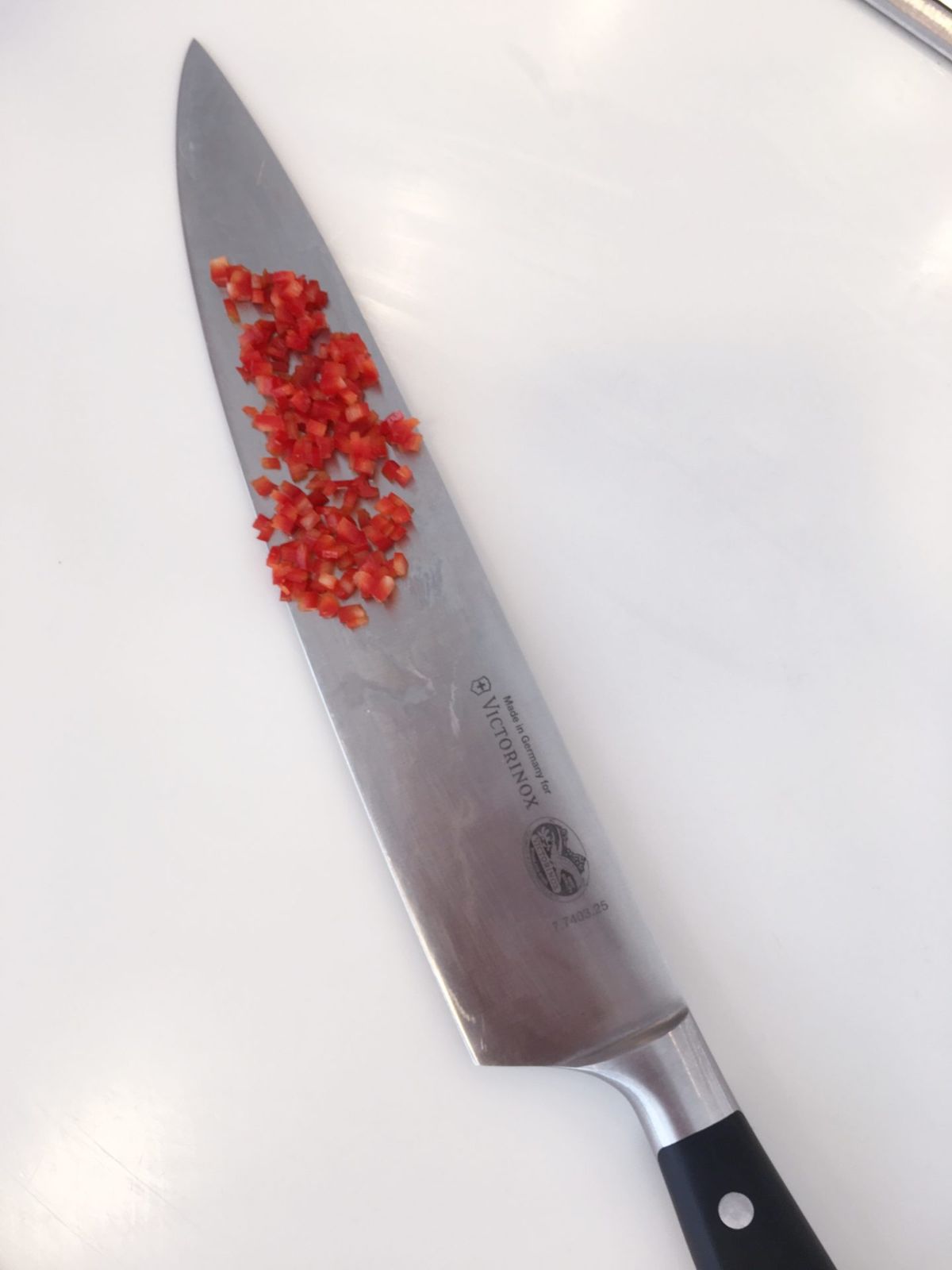
On our menu were minestrone, a delicious and little-known Italian soup, risotto with porcini or penny bun mushrooms, and steak au poivre. With the meat we also made a delicious sauce, and its purple colour won hearts!
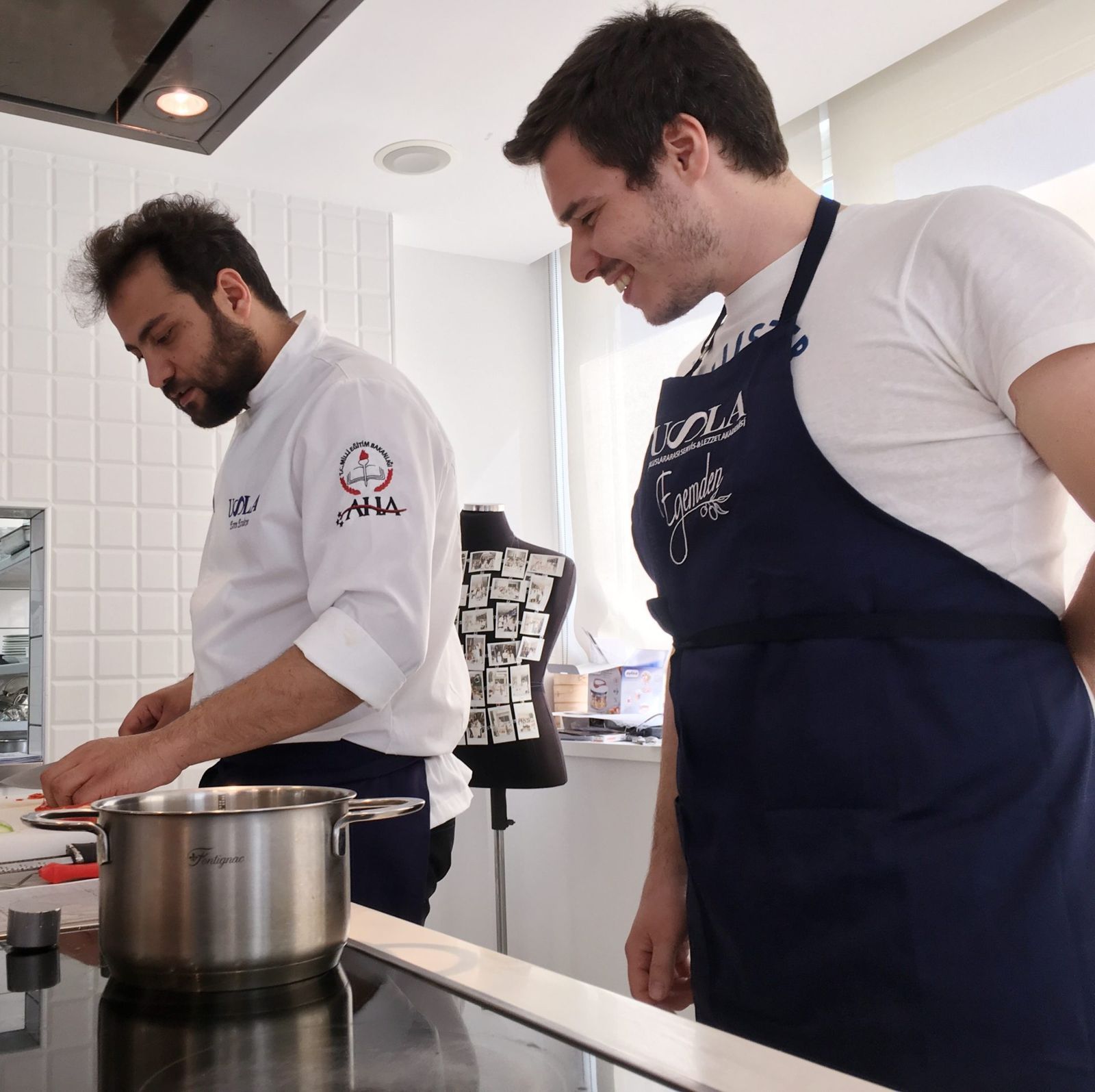
Now to knife cutting techniques: what we learned and discovered in the short workshop.
Knives are actually instruments that try to make the chef's job easier through their design and the right grip. The chef especially stresses that the handle captures an ergonomics that fits the hand, and that the cutting part is produced with slopes and angles set by specific engineering to make cutting easier.
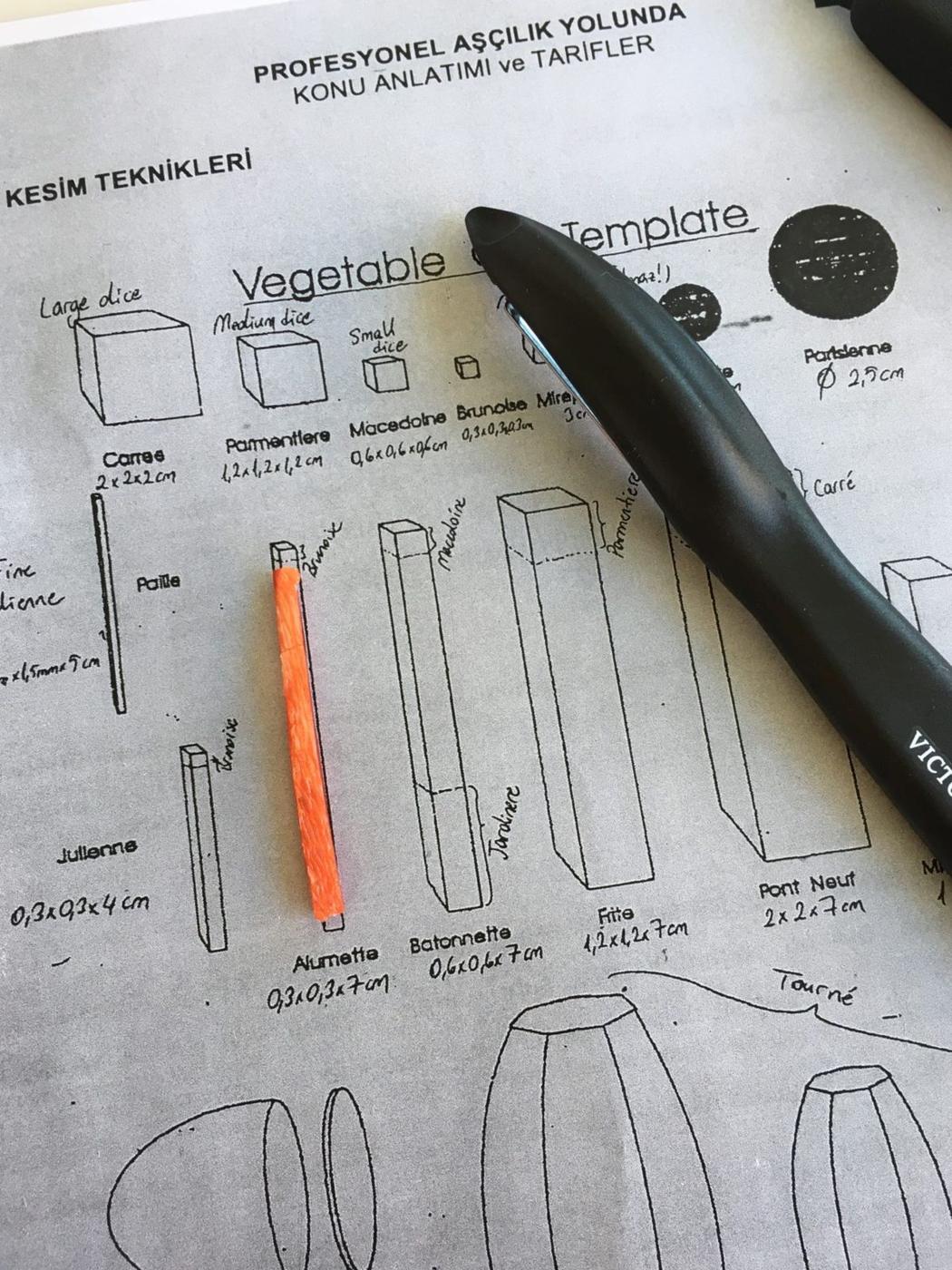
With the Chef's Table scenes of boards and knives in professional kitchens that we've been watching for a while in mind, we get to know the vegetable cut sizes set for harmony on the plate. From the 3 cm3 cube with uneven sides, Rough Chop, to the tiniest cube with base measurements of 0.3 x 0.3 x 0.3 centimetres, Brunoise, and, going up as multiples of Brunoise, the 0.6 x 0.6 x 0.6 centimetre Macedoine (small dice), and the 1.2 x 1.2 x 1.2 centimetre Parmentiere(medium dice): we say, look at all there is. These will make our plate look beautiful and aesthetic.
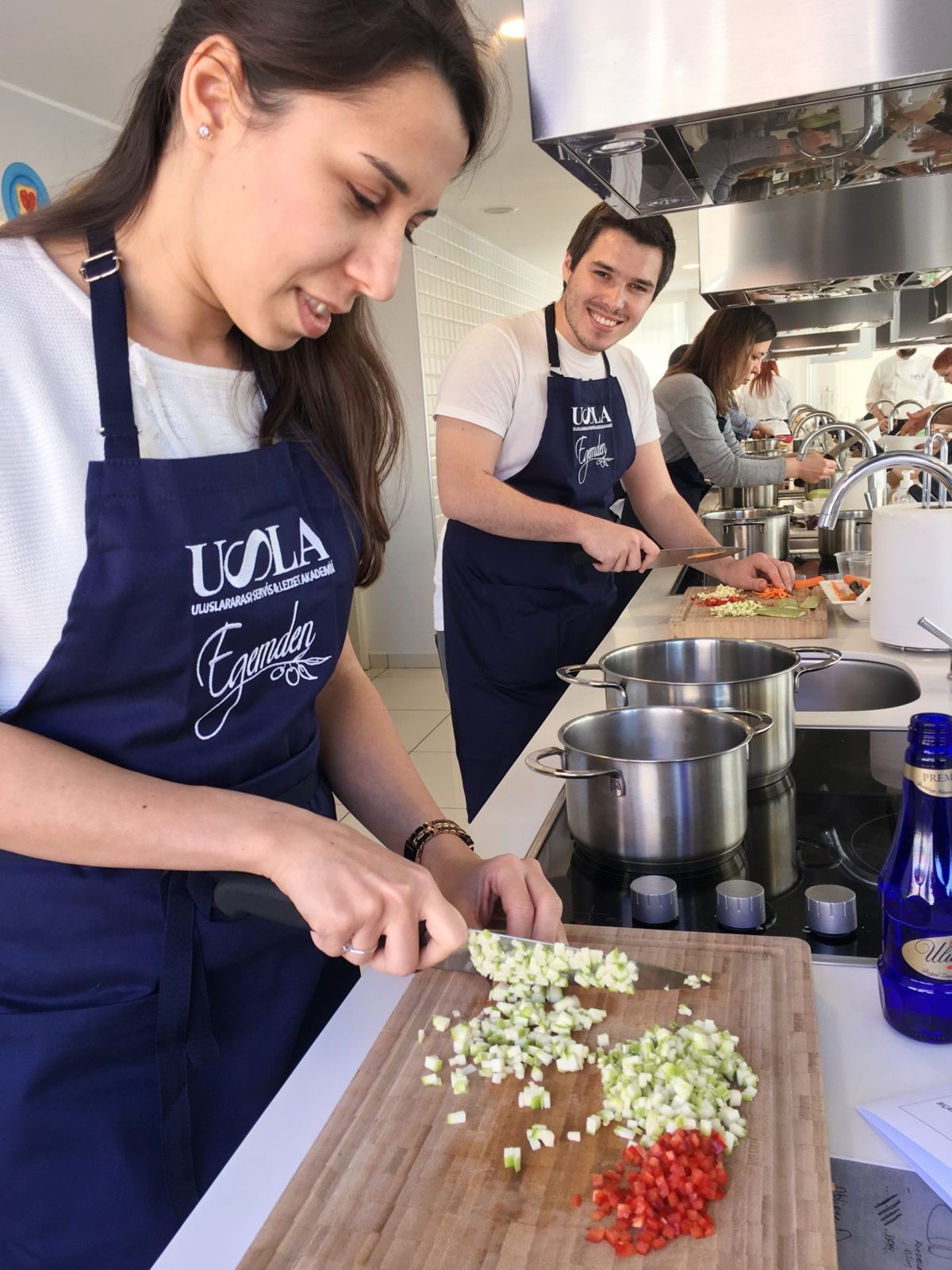
Below we share the sizes of the Julienne cut, which we knew from hearsay, and of Alumette, Batonnette and Fine Julienne.
"If you can cut Brunoise, you can cut anything, the rest is maths!" Heeding this warning, we start cutting the ingredients needed for our soup. The list and recipe are below :)
INGREDIENTS
- Half a carrot, small dice
- Half a celery stalk, small dice
- Half a courgette, middle part not used, small dice
- 3 baby spinach leaves, chiffonade
- Half a peeled, deseeded tomato
- 1 clove of garlic, brunoise
- A quarter of an onion, brunoise
- 1 tablespoon kidney beans
- 50 grams couscous, crushed
- 2 tablespoons olive oil
- 1 cup vegetable or chicken stock
- 1 litre water
- Grated parmesan
- Salt, black pepper
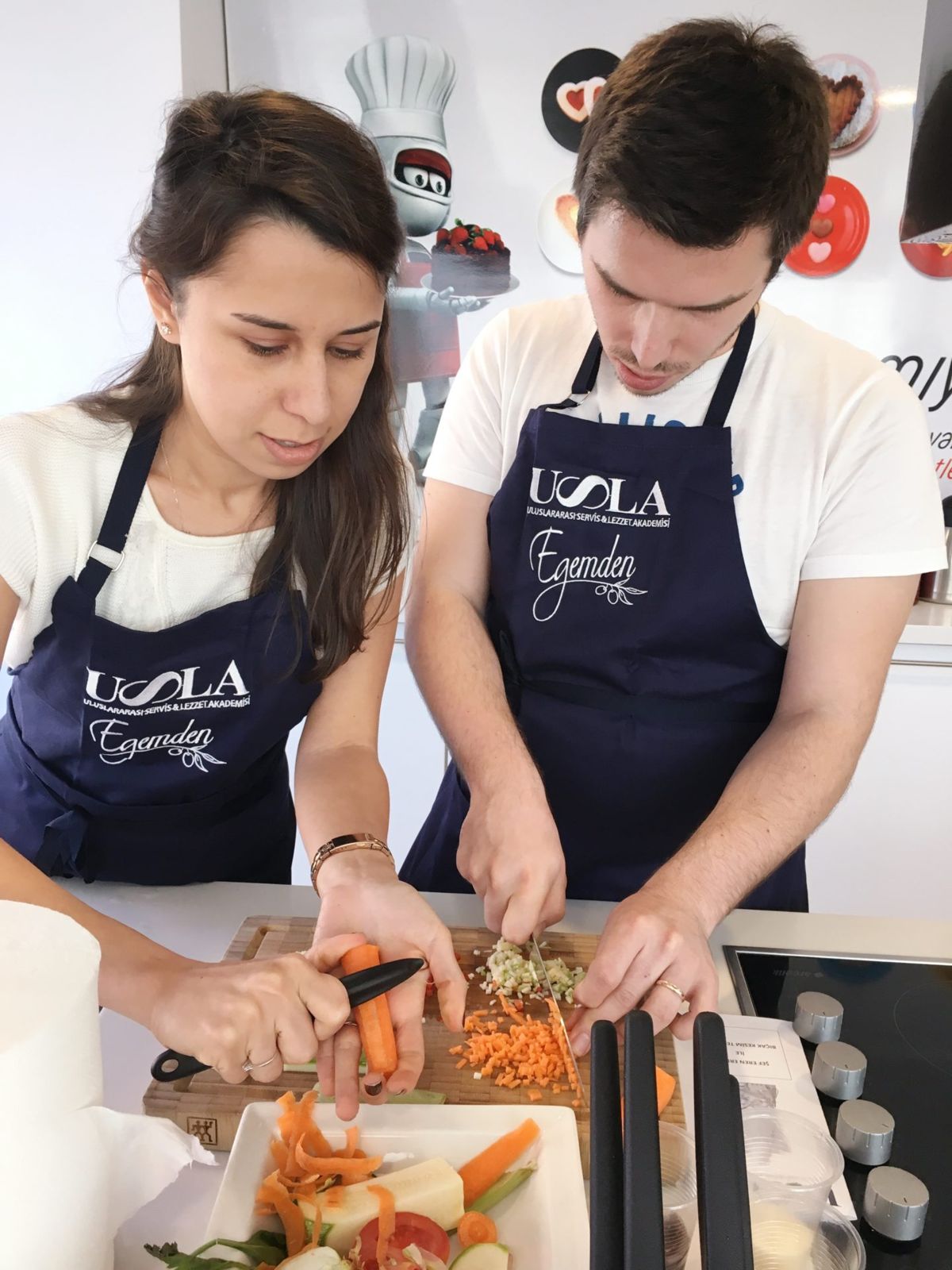
Pour olive oil into a pot and heat it. Meanwhile, we top up 1 cup of vegetable or chicken stock to 1 litre with water and keep it warm on low heat.
In order, we add the onion, celery stalk, carrot and garlic to the olive oil and sauté a little. As important as the chopping technique is adding from hard to soft. We add 1-2 ladles of chicken stock to the sautéed vegetables, season with salt and black pepper and leave it to boil.
After 10 minutes we add the courgettes, the chopped tomato with its seeds removed, and 2 minutes later the couscous.
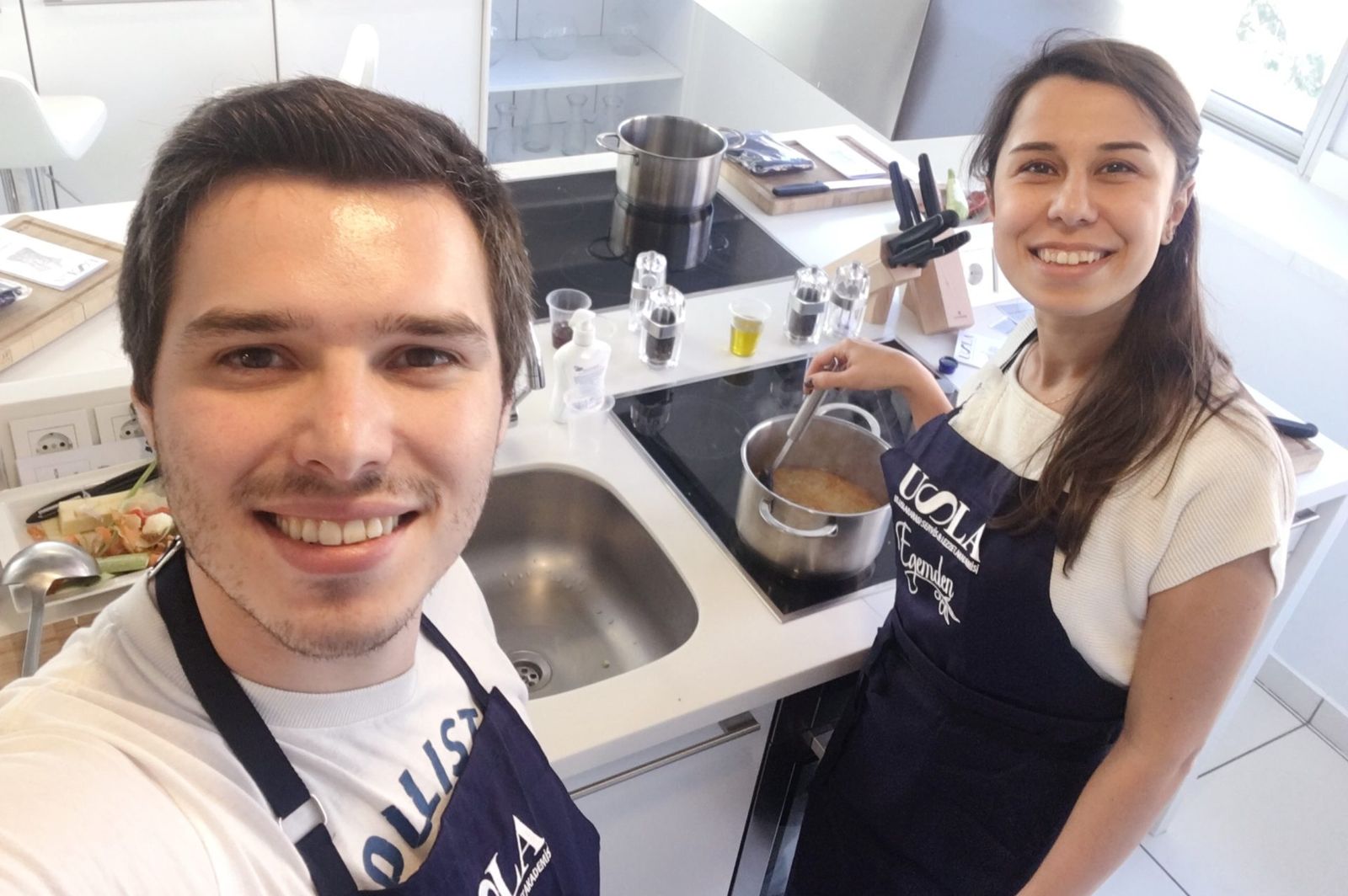
After 5 more minutes we add the kidney beans and bring it to the boil.
At this stage we take the soup off the heat and put it into bowls while hot. You need to stack the leaves of fresh herbs on top of each other and use the Chiffonade cutting technique. We serve it by adding the baby spinach cut this way and grated parmesan.
We made the other recipes with lots of love too. There'll be new discoveries; for now, let's finish with mealtime arriving and Anıl's cheerfulness😋
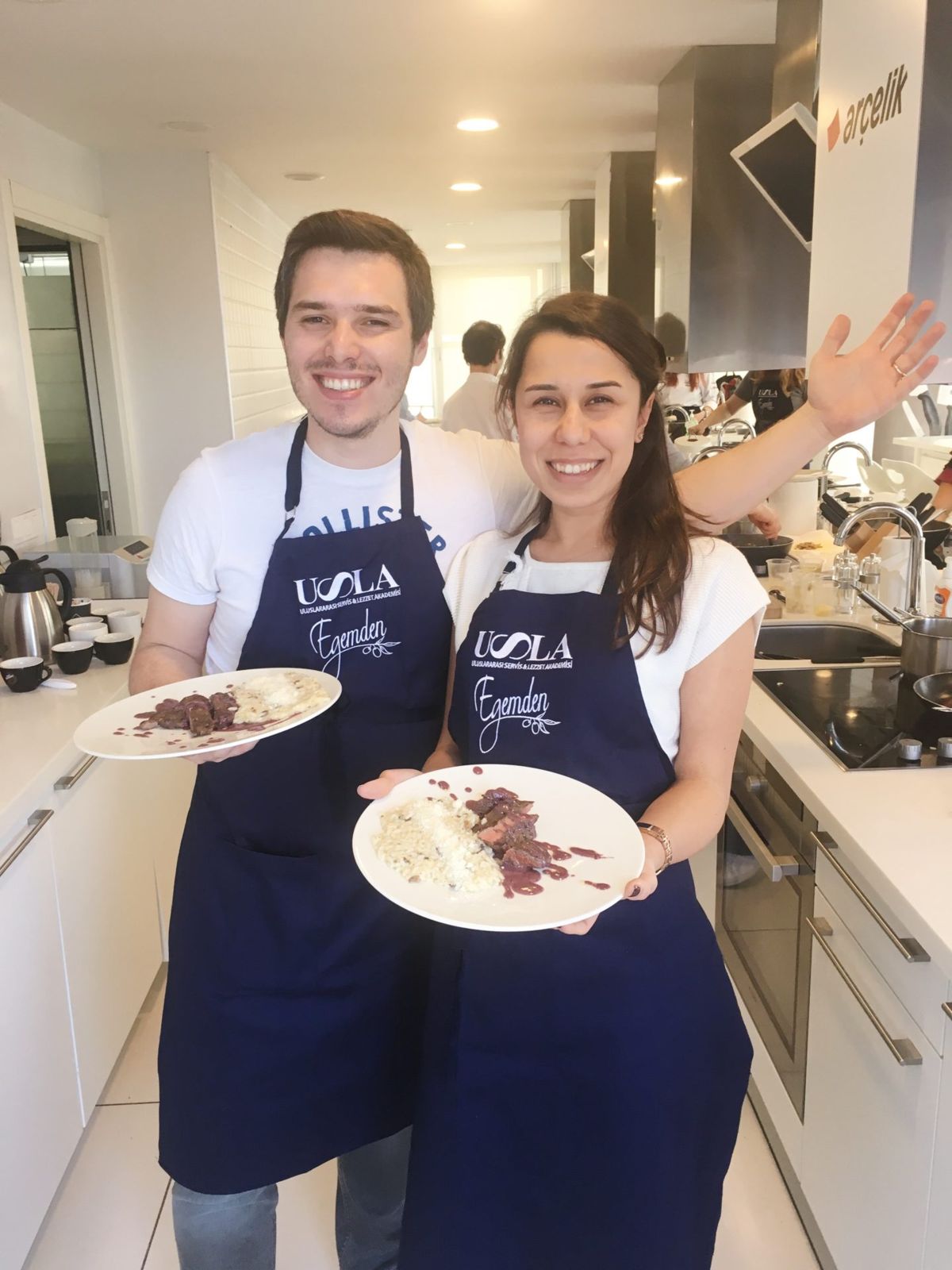
For this lovely workshop event, we thank above all Usla Akademi and Victorinox.